-

Exponential Linear Units (ELU) Activation Function.
Exponential Linear Unit Activation Function Table Of Contents: What IsExponential Linear Unit Activation Function? Formula & Diagram For Exponential Linear Unit Activation Function. Where To Use Exponential Linear Unit Activation Function? Advantages & Disadvantages Of Exponential Linear Unit Activation Function. (1) What Is Exponential Linear Unit Activation Function? The Exponential Linear Unit (ELU) activation function is a type of activation function commonly used in deep neural networks. It was introduced as an alternative to the Rectified Linear Unit (ReLU) and addresses some of its limitations. The ELU function introduces non-linearity, allowing the network to learn complex relationships in the data.
-
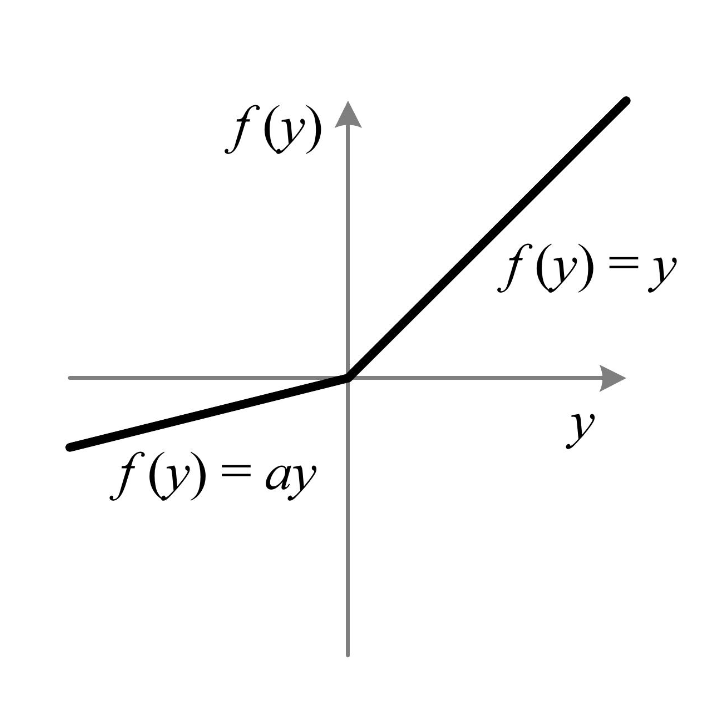
Parametric ReLU (PReLU) Activation Function
Parametric ReLU (PReLU) Activation Function Table Of Contents: What Is Parametric ReLU (PReLU) Activation Function? Formula & Diagram For Parametric ReLU (PReLU) Activation Function. Where To Use Parametric ReLU (PReLU) Activation Function? Advantages & Disadvantages Of Parametric ReLU (PReLU) Activation Function. (1) What Is Parametric ReLU (PReLU) Activation Function? The Parametric ReLU (PReLU) activation function is an extension of the standard ReLU (Rectified Linear Unit) function that introduces learnable parameters to control the slope of the function for both positive and negative inputs. Unlike the ReLU and Leaky ReLU, which have fixed slopes, the PReLU allows the slope to be
-

Leaky ReLU Activation Function.
Leaky ReLU Activation Function. Table Of Contents: What Is Leaky ReLU Activation Function? Formula & Diagram For Leaky ReLU Activation Function. Where To Use Leaky ReLU Activation Function? Advantages & Disadvantages Of Leaky ReLU Activation Function? (1) What Is Leaky ReLU Activation Function? The Leaky ReLU (Rectified Linear Unit) activation function is a modified version of the standard ReLU function that addresses the “dying ReLU” problem, where ReLU neurons can become permanently inactive. The Leaky ReLU introduces a small slope for negative inputs, allowing the neuron to respond to negative values and preventing complete inactivation. (2) Formula & Diagram For
-
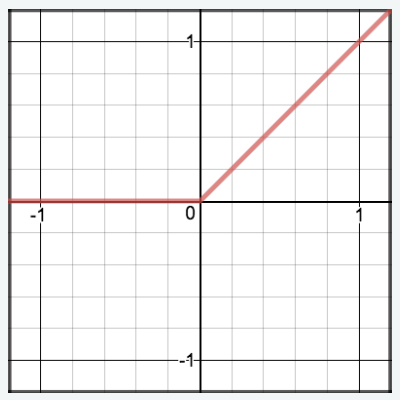
Rectified Linear Unit (ReLU) Activation:
Rectified Linear Unit (ReLU) Activation: Table Of Contents: What Is Rectified Linear Unit (ReLU) Activation? Formula & Diagram For Rectified Linear Unit (ReLU) Activation. Where To Use Rectified Linear Unit (ReLU) Activation? Advantages & Disadvantages Of Rectified Linear Unit (ReLU) Activation. (1) What Is Rectified Linear Unit (ReLU) Activation? Returns the input if it is positive; otherwise, outputs zero. Simple and computationally efficient. Popular in deep neural networks due to its ability to alleviate the vanishing gradient problem. (2) Formula & Diagram For Rectified Linear Unit (ReLU) Activation. Formula: Diagram: (3) Where To Use Rectified Linear Unit (ReLU) Activation. Hidden
-
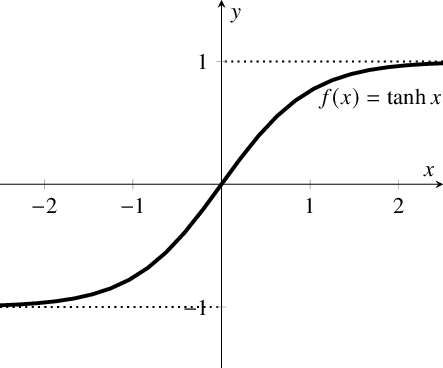
Hyperbolic Tangent (tanh) Activation.
Hyperbolic Tangent (tanh) Activation. Table Of Contents: What Is Hyperbolic Tangent (tanh) Activation? Formula & Diagram For Hyperbolic Tangent (tanh) Activation. Where To Use Hyperbolic Tangent (tanh) Activation? Advantages & Disadvantages Of Hyperbolic Tangent (tanh) Activation. (1) What Is Hyperbolic Tangent (tanh) Activation? Maps the input to a value between -1 and 1. Similar to the sigmoid function but centred around zero. Commonly used in hidden layers of neural networks. (2) Formula & Diagram For Hyperbolic Tangent (tanh) Activation Formula: Diagram: (3) Where To Use Hyperbolic Tangent (tanh) Activation? Hidden Layers of Neural Networks: The tanh activation function is often
-

Sigmoid Activation Function.
Sigmoid Activation Functions Table Of Contents: What Is Sigmoid Activation Function? Formula & Diagram For Sigmoid Activation Function. Where To Use Sigmoid Activation Function? Advantages & Disadvantages Of Sigmoid Activation Function. (1) What Is Sigmoid Activation Function? Maps the input to a value between 0 and 1. S-shaped curve. Used in the output layer of binary classification problems, where the output represents the probability of belonging to a class. (2) Formula & Diagram Sigmoid Activation Function? Formula: Diagram: (3) Where To Use Sigmoid Activation Function? Binary Classification: Sigmoid activations are often used in the output layer of neural networks for
-

Activation Functions.
Activation Functions Table Of Contents: What Is An Activation Function? Why To Use Activation Function? Why Should An Activation Function Be Differentiable? Types Of Activation Functions. Sigmoid(Logistic) Activation Function. Hyperbolic Tangent (tanh) Activation. Rectified Linear Unit (ReLU) Activation. Leaky ReLU Activation. Softmax Activation. (1) What Is An Activation Function? An activation function is a mathematical function that determines the output of a neuron or a layer of neurons in a neural network. It introduces non-linearity into the network, allowing it to model complex relationships and make non-linear transformations of the input data. (2) Why To Use Activation Function? Activation functions
-

What Is Perceptron?
What Is Perceptron? Table Of Contents: What Is A Perceptron? Structure Of Perceptron? Activation Function For Perceptron. Learning Algorithm For Perceptron. Single Layer Perceptron. Limitations Of Perceptron. Multi-Layer Perceptron. (1) What Is A Perceptron? Perceptrons are the building blocks of artificial neural networks (ANNs) and serve as the simplest form of artificial neuron. They were introduced by Frank Rosenblatt in the late 1950s and played a crucial role in the development of neural networks. Perceptron is a single-layer neural network and a multi-layer perceptron is called Neural Networks. Perceptron is a linear classifier (binary). Also, it is used in supervised
-
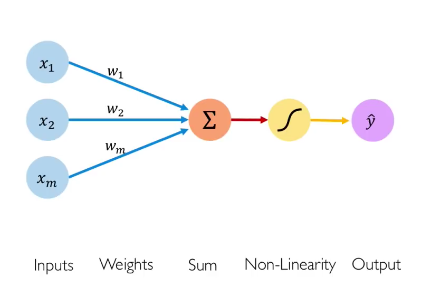
Working Of A Single Neuron.
Working Of A Single Neuron. Table Of Contents: The Linear Unit. Example: The Linear Unit As A Model. Multiple Inputs. (1) The Linear Unit. So let’s begin with the fundamental component of a neural network: the individual neuron. As a diagram, a neuron (or unit) with one input looks like below: The input is x. Its connection to the neuron has a weight which is w. Whenever a value flows through a connection, you multiply the value by the connection’s weight. For the input, what reaches the neuron is w * x. A neural network “learns” by modifying its weights. The b is a special kind of weight we call
-

How Do Neural Networks Work?
How Does Neural Networks Works? Table Of Contents: How Does Neural Networks Work? Input Data. Feedforward. Activation Functions. Output Layer. Loss Function. Backpropagation and Training. Training Iterations. Prediction and Inference. (1) How Does Neural Networks Work? Neural networks work by processing input data through a network of interconnected artificial neurons, also known as nodes or units. The network learns from the input data and adjusts the connections (weights) between neurons to make accurate predictions or perform specific tasks. Here’s a general overview of how neural networks work: (2) Input Data. The neural network receives input data, which can be in