-

Transformers – Encoder Architecture
Transformers – Encoder Architecture Table Of Contents: What Is Encoder In Transformer? Internal Workings Of Encoder Module. How Encoder Module Works With An Example. Why We Use Addition Operation With The Original Input Again In Encoder Module? (1) What Is Encoder In Transformer? In a Transformer model, the Encoder is responsible for processing input data (like a sentence) and transforming it into a meaningful contextual representation that can be used by the Decoder (in tasks like translation) or directly for classification. Encoding is necessary because, it, Transforms words into numerical format (embeddings). Allows self-attention to analyze relationships between words. Adds
-

Transformers – Layered Normalization
Transformers – Layered Normalization Table Of Contents: What Is Normalization ? What Is Batch Normalization ? Why Batch Normalization Does Not Works On Sequential Data ? (1) What Is Normalization? What We Are Normalizing ? Generally you normalize the input values which you pass to the neural networks and also you can normalize the output from an hidden layer. Again we are normalizing the hidden layer output because again the hidden layer may produce the large range of numbers, hence we need to normalize them to bring them in a range. Benefits Of Normalization. (2) What Is Batch Normalization? https://www.praudyog.com/deep-learning-tutorials/transformers-batch-normalization/
-

Deep Learning – Batch Normalization.
What Is Batch Normalization ? Table Of Contents: What Is Batch Normalization ? Why Is Batch Normalization Needed ? Why Is Batch Normalization Needed ? Example Of Batch Normalization. Why is Internal Covariate Shift (ICS) a Problem If Different Distributions Are Natural? (1) What Is Batch Normalization ? Batch Normalization is a technique used in Deep Learning to speed up training and improve stability by normalizing the inputs of each layer. Batch Normalization keeps activations stable by normalizing each layer’s output. Without Batch Normalization it can lead to unstable training, slow convergence, overfitting, or underfitting. Special Note: If at every
-

Transformers – Positional Encoding in Transformers
Transformers – Positional Encoding Table Of Contents: What Is Positional Encoding In Transformers? Why Do We Need Positional Encoding? How Does Positional Encoding Works? Positional Encoding In Attention All You Need Paper. Interesting Observations In Sin & Cosine Curve. How Positional Encoding Captures The Relative Position Of The Words ? (1) What Is Positional Encoding In Transformer? Positional Encoding is a technique used in Transformers to add order (position) information to input sequences. Since Transformers do not have built-in sequence awareness (unlike RNNs), they use positional encodings to help the model understand the order of words in a sentence. (2)
-

Transformers – Multi-Head Attention in Transformers
Multi Head Attention Table Of Contents: Disadvantages Of Self Attention Mechanism. What Is Multi-Head Attention ? How Multi Headed Attention Works ? (1) Disadvantages Of Self Attention. The task is read the sentence and tell me the meaning of it. Meaning-1: An astronomer was standing and another man saw him with a telescope. Meaning-2: An astronomer was standing with a telescope and another man just saw him. In this sentence we are getting two different meaning of a single sentence. How Self Attention Will Works On This Sentence ? The self attention will find out the similarity of each word
-

Transformers – Why Self Attention Is Called Self ?
Why Self Attention Is Called Self ? Table Of Contents: Why Self Attention Is Called Self ? (1) Why Self Attention Is Called Self ? We have learnt the Attention concepts from the Luong Attention. In Luong attention mechanism, we calculate which word of the Encoder is more important in predicting the current time step output of the Decoder. To Do this we assign an attention score to each word of the Encoder and pass it as input to the Decoder. We put a SoftMax layer to normalize the attention score. The same operation mathematical we are performing in case
-

Transformers – Self Attention Geometric Intuition!!
Self Attention Geometric Intuition!! Table Of Contents: What Is Self Attention? Why Do We Need Self Attention? How Self Attention Works? Example Of Self Attention. Where is Self-Attention Used? Geometric Intuition Of Self-Attention. (1) What Is Self Attention? Self-attention is a mechanism in deep learning that allows a model to focus on different parts of an input sequence when computing word representations. It helps the model understand relationships between words, even if they are far apart, by assigning different attention weights to each word based on its importance in the context. (2) Why Do We Need Self Attention? (3) How
-
How The Dense LSTM Layers Handles Input ?
How The Dense LSTM Layers Handles Input ? Table Of Contents: How Are Words Passed to Neurons in an LSTM(128) Layer? Step 1: Input from the Embedding Layer Step 2: Passing Each Word to the LSTM Layer Step 3: What Happens Inside Each LSTM Neuron? Step 4: Understanding the Output of LSTM(128) Final Conclusion Key Takeaway (1) How Are Words Passed to Neurons in an LSTM(128) Layer? (2) How Individual LSTM Neurons Connected To Each Other. (3) What Is The Output Of LSTM(128) Number Of Neurons. (4) Step 1: Input from the Embedding Layer (5) Step 2: Passing Each Word
-

Text Preprocessing Steps In NLP
Text preprocessing Steps In NLP Table Of Contents: Text Cleaning Text Tokenization Text Normalization Text Vectorization (1) Text Cleaning (2) Text Tokenization Methods Of Text Tokenization: (3) Text Normalization (4) Text Vectorization Common Techniques for Text Vectorization:
-
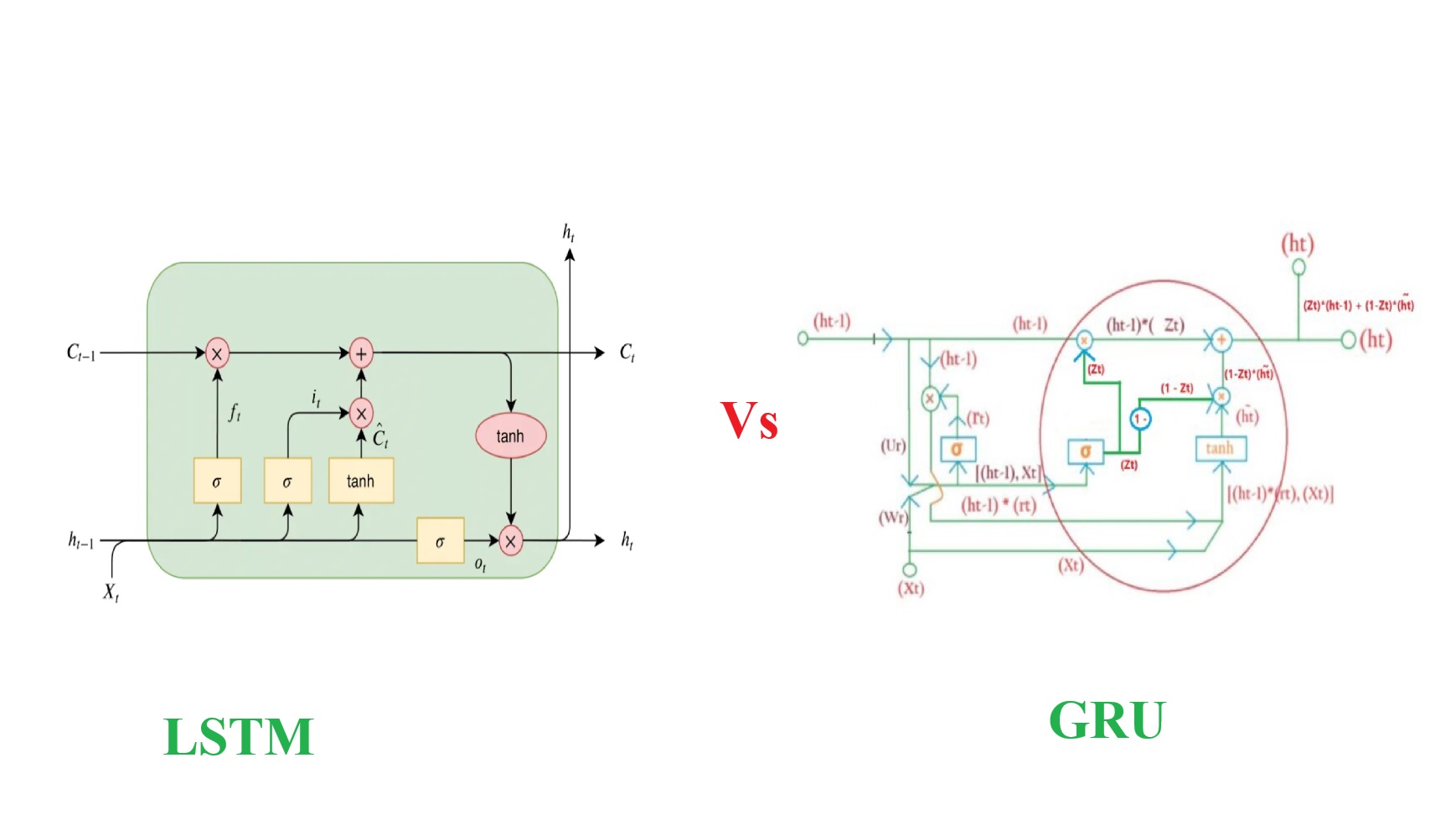
Difference Between LSTM & GRU.
Difference Between LSTM & GRU Table Of Contents: Structure and Complexity. Cell State vs. Hidden State Gating Mechanism Parameter Efficiency Performance Interpretability Use Cases Summary Table Conclusion