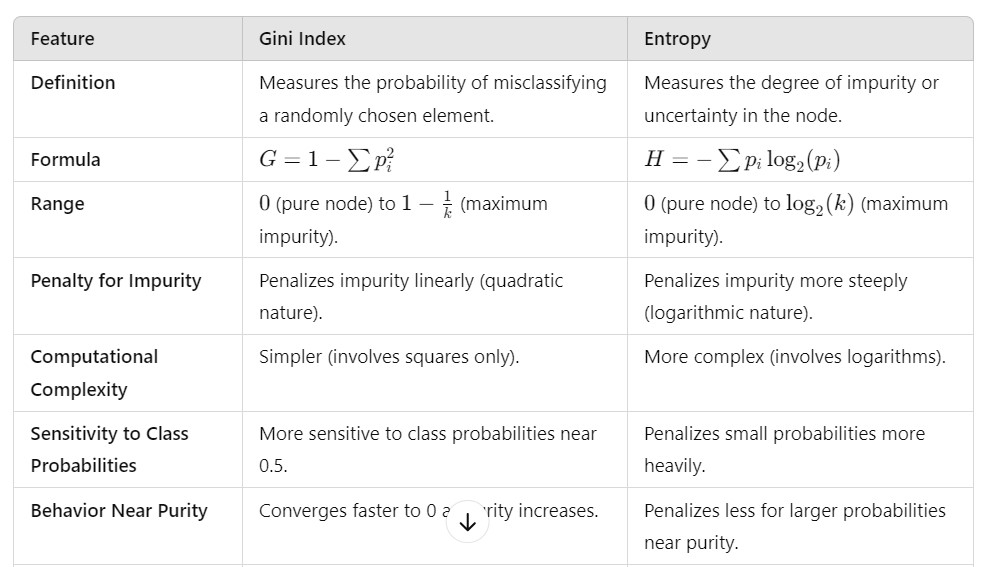
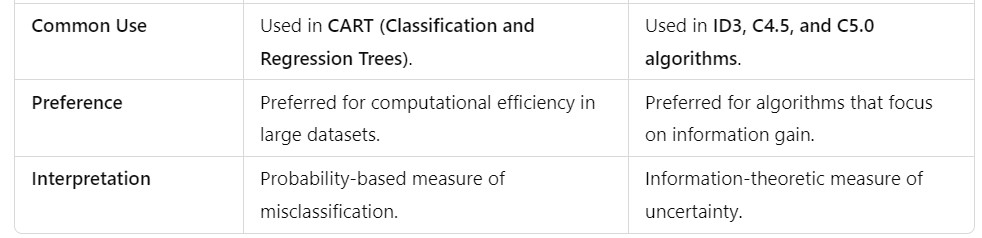
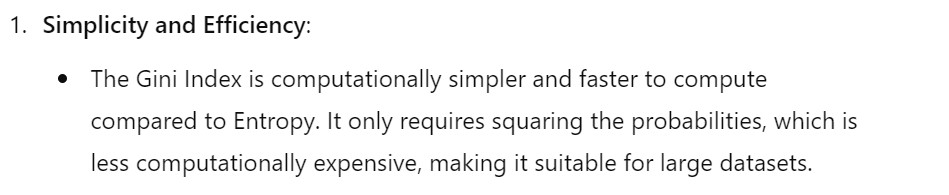
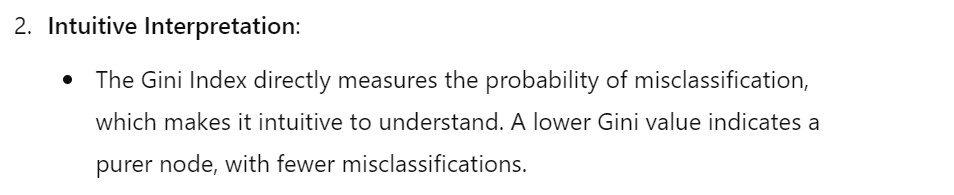
In the context of decision trees, the Gini Indexis a metric used to evaluate the purity of a split or node.
It quantifies the probability of incorrectly classifying a randomly chosen element from the dataset if it were labeled randomly according to the class distribution.
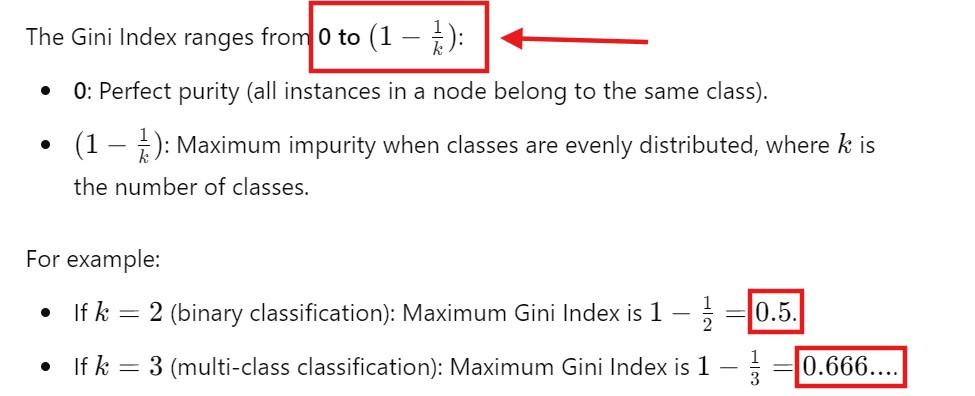
Range Of Gini Index
Formula For Gini Index:
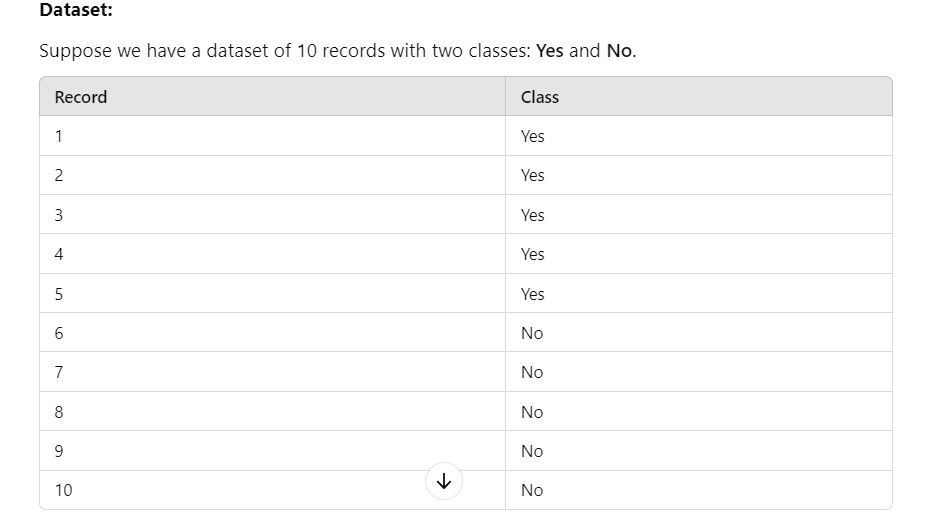
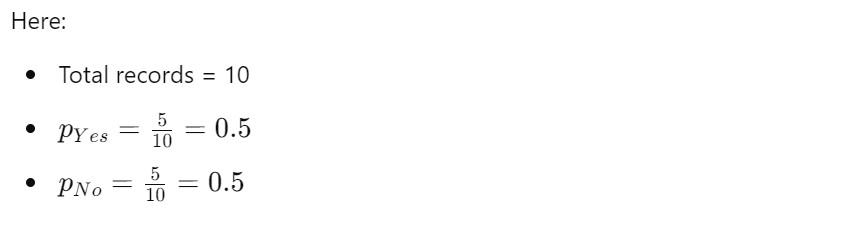
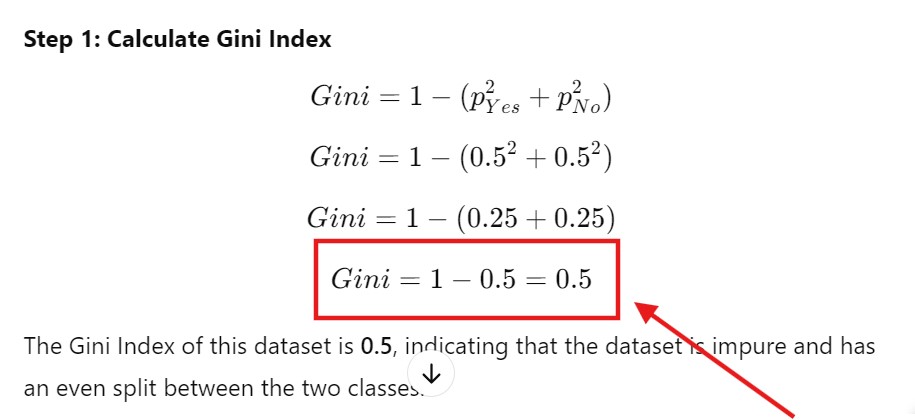
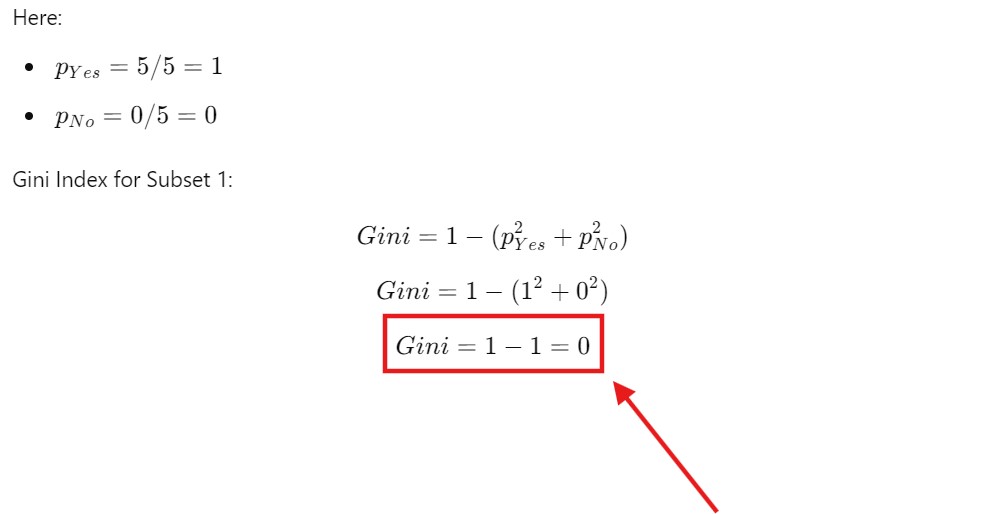
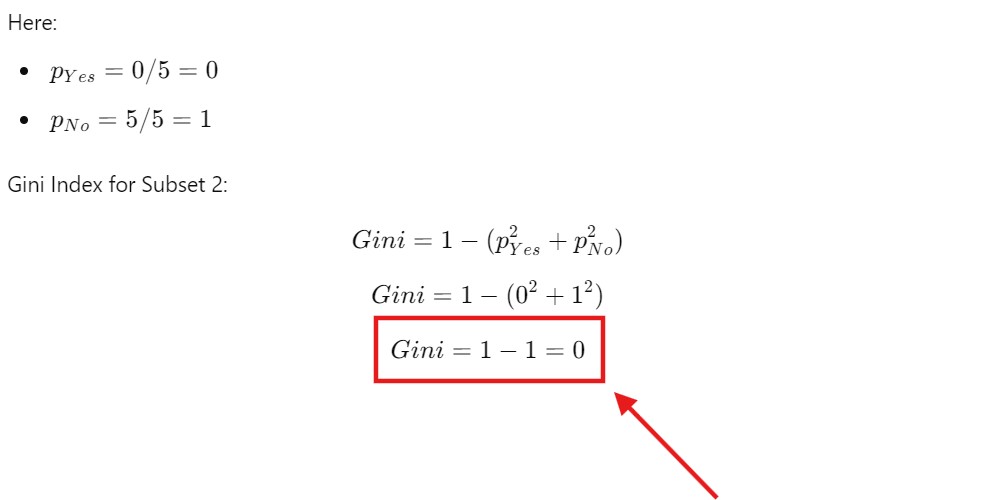
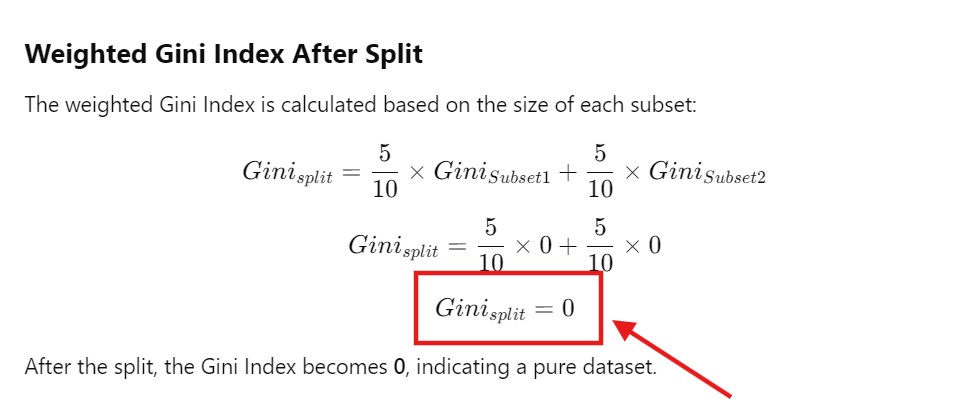
Example Of Gini Index:
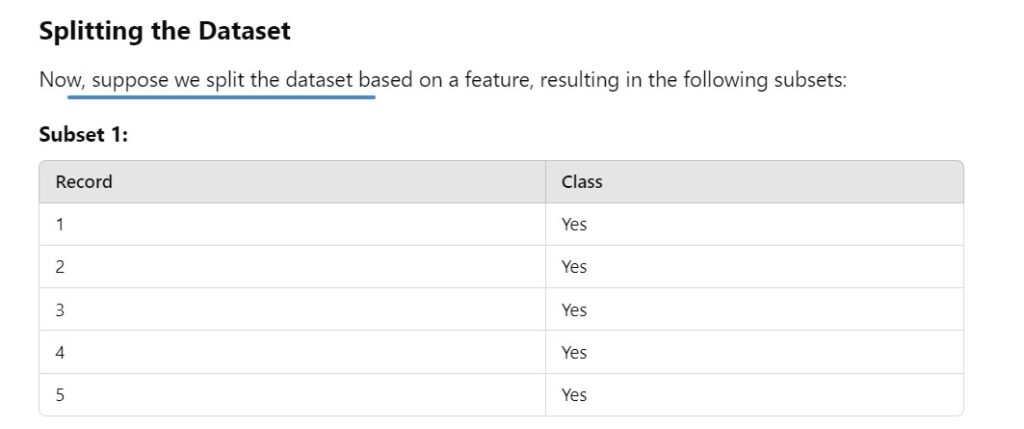
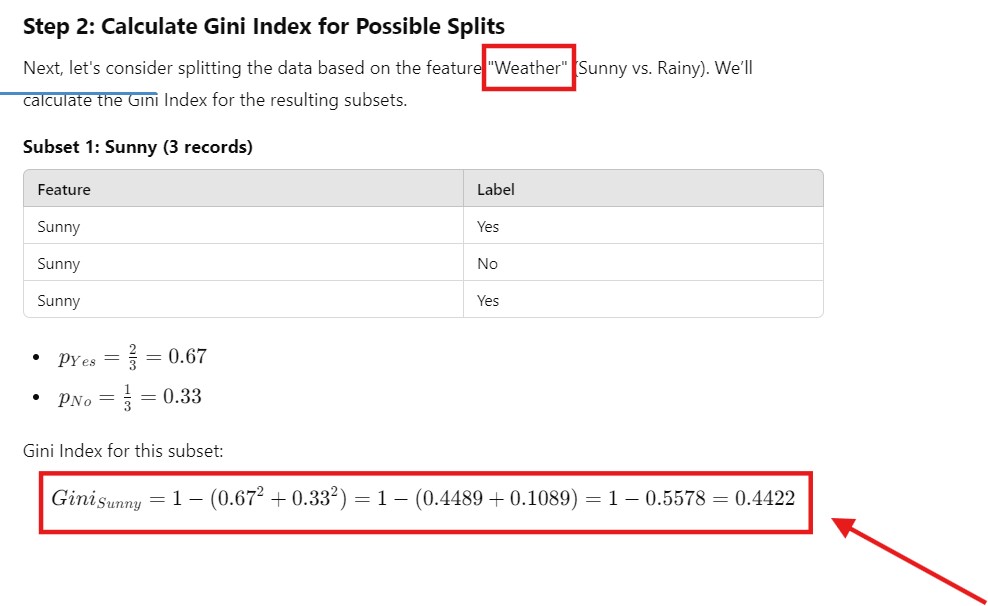
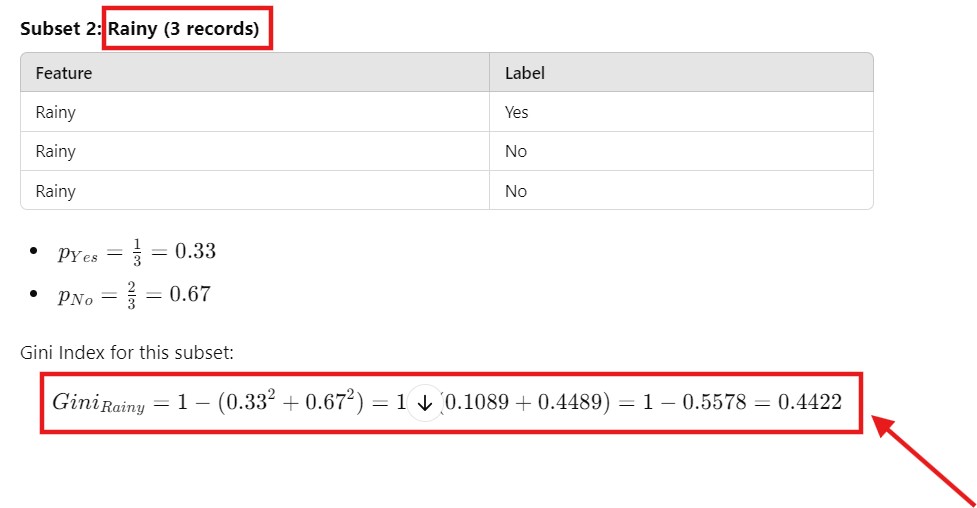
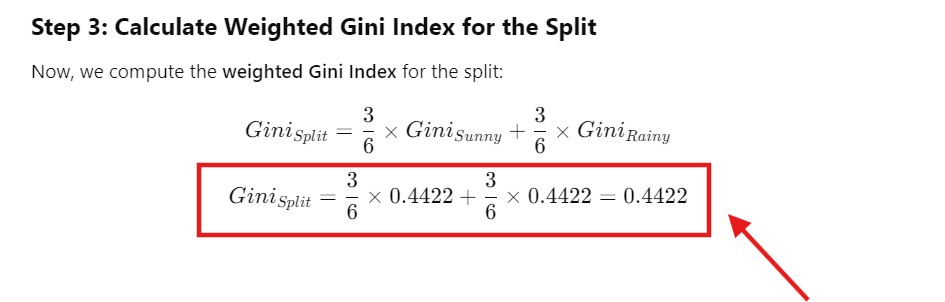
After Splitting The Dataset Calculate The Gini Index:
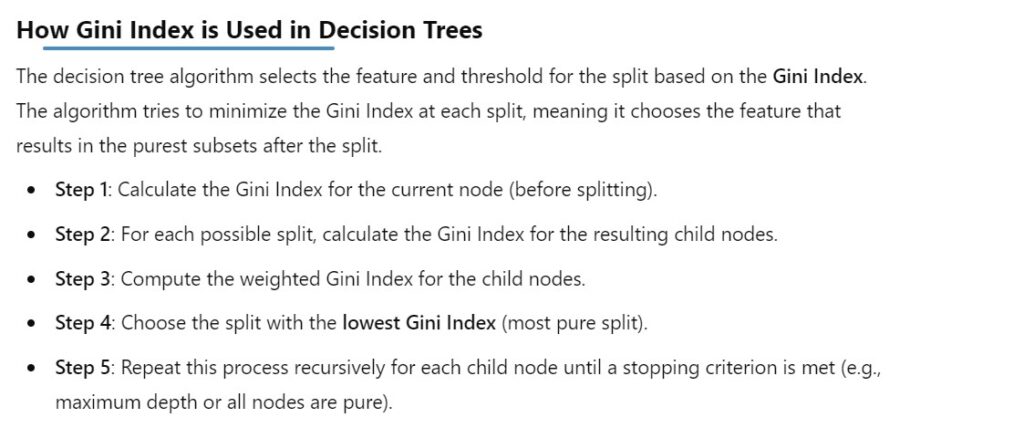
(2) How Gini Index Used In Decision Trees ?
The Gini Index is a critical component of decision trees, particularly in the CART (Classification and Regression Trees) algorithm.
It is used to determine the “impurity” or “purity” of a node and helps in selecting the best feature to split the data at each step.
In a decision tree, we aim to split the data in such a way that the resulting nodes (subsets) are as pure as possible (i.e., most of the data in the node belongs to a single class).