from transformers import AutoModelForCausalLM, AutoTokenizer, Trainer, TrainingArguments, DataCollatorForLanguageModeling
from datasets import load_dataset, Dataset
from peft import get_peft_model, LoraConfig, TaskType, prepare_model_for_kbit_training
import torch

# Step 1: Load tokenizer and base model
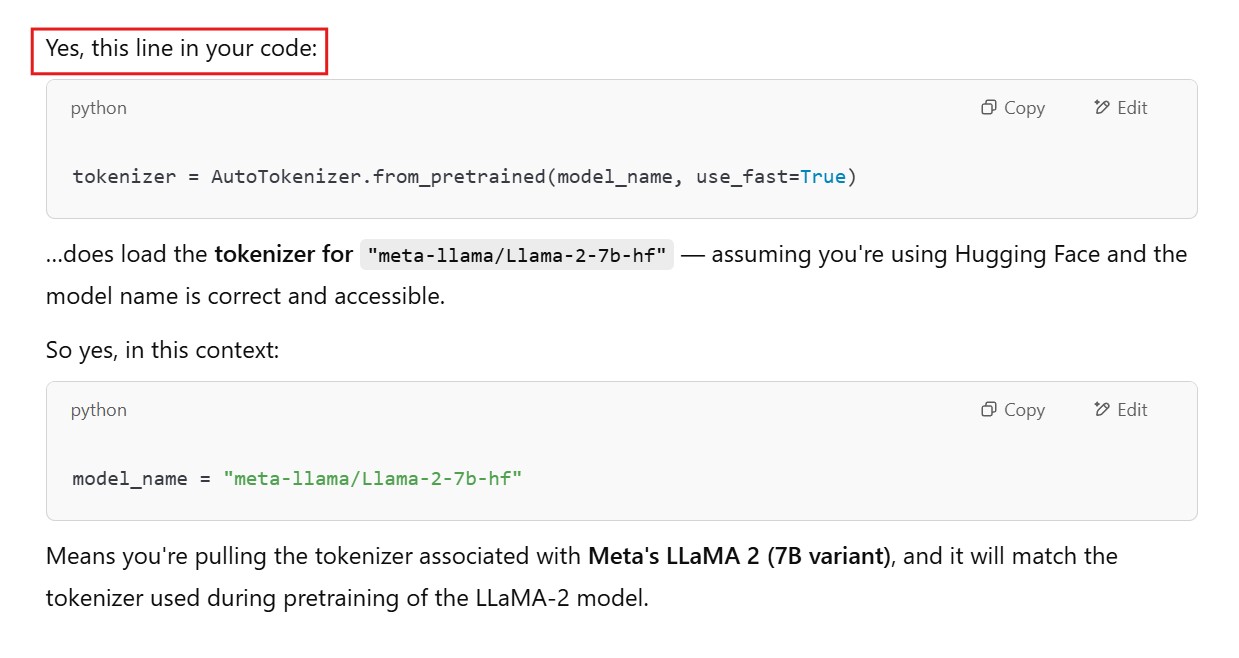
model_name = "meta-llama/Llama-2-7b-hf"  # Or another open model
tokenizer = AutoTokenizer.from_pretrained(model_name, use_fast=True)
model = AutoModelForCausalLM.from_pretrained(model_name, load_in_4bit=True, device_map="auto")  # Quantized loading

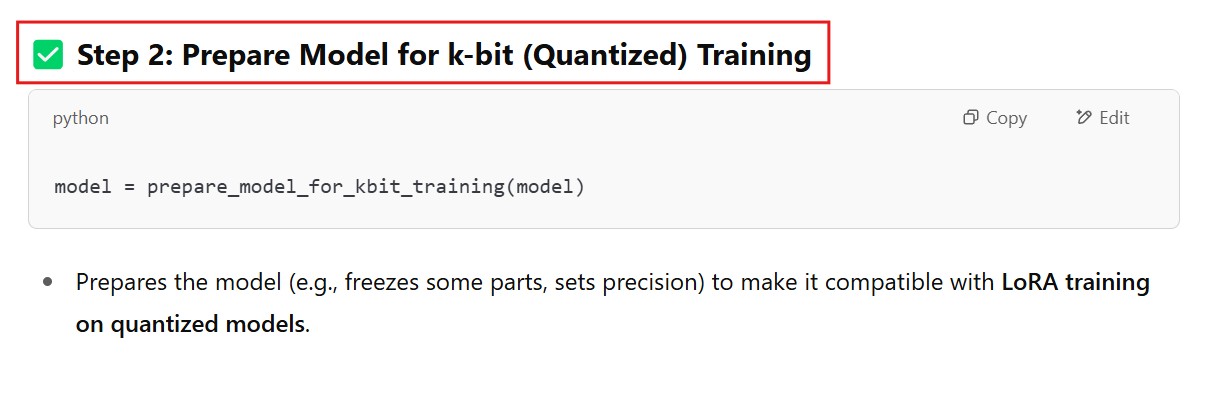
# Step 2: Prepare model for LoRA training
model = prepare_model_for_kbit_training(model)

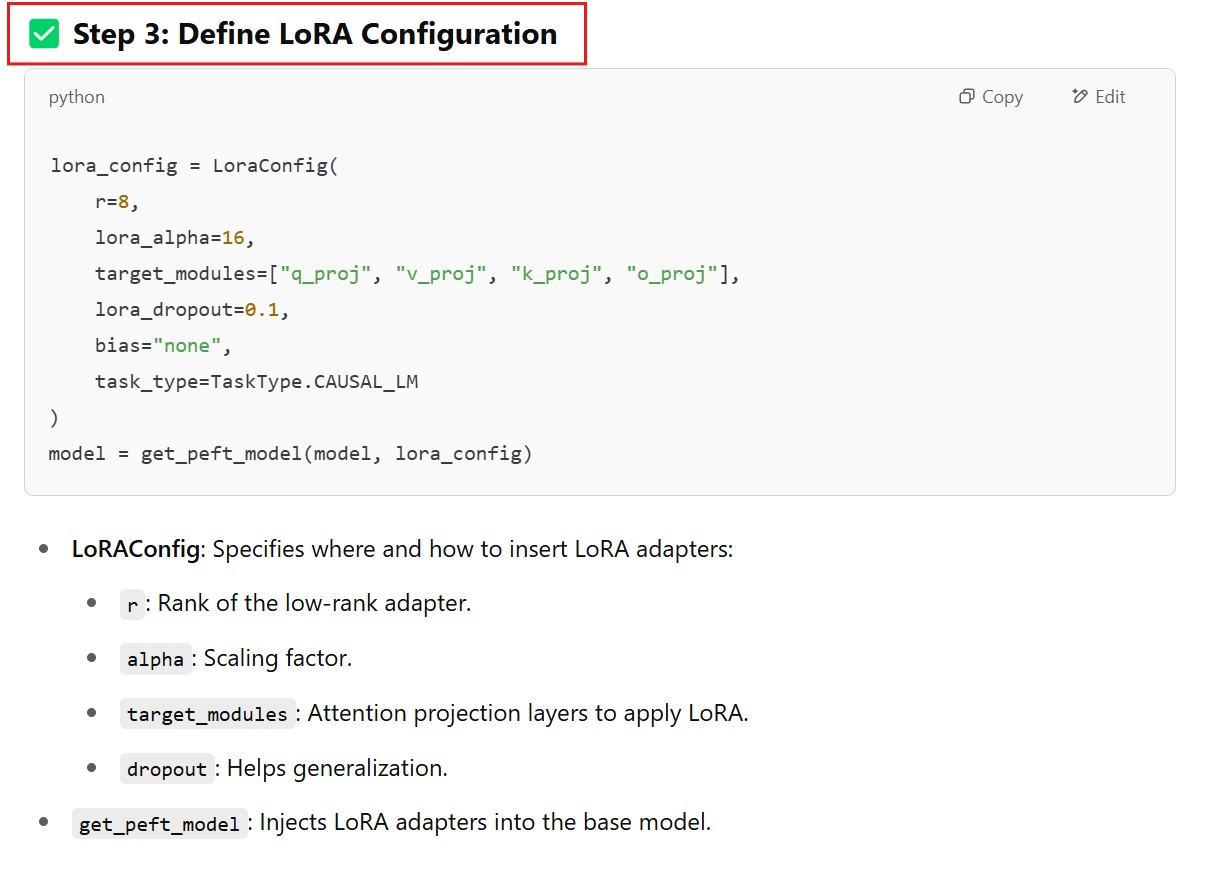
# Step 3: Set up LoRA configuration
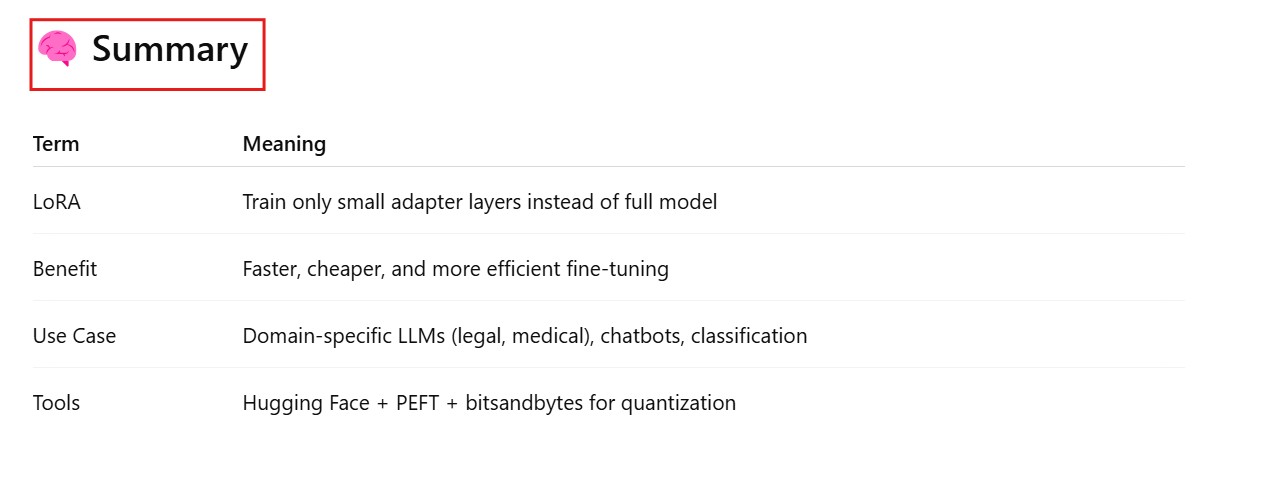
lora_config = LoraConfig(
    r=8,
    lora_alpha=16,
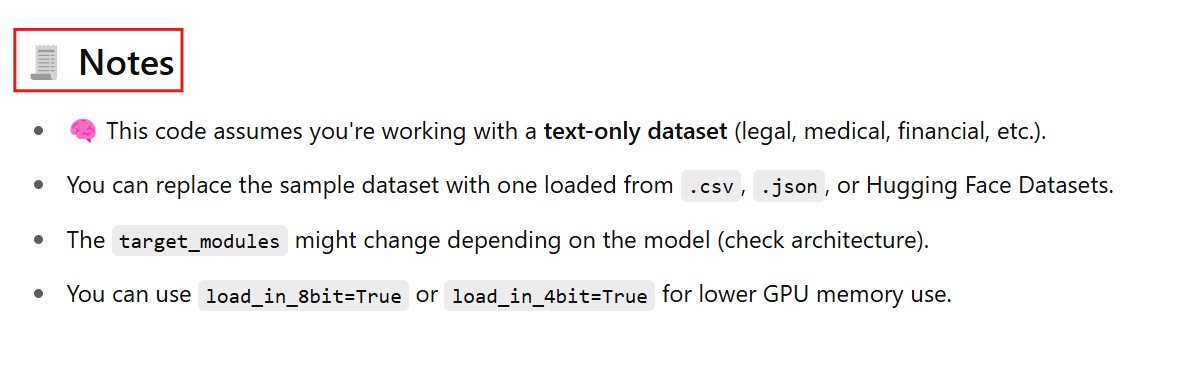
    target_modules=["q_proj", "v_proj", "k_proj", "o_proj"],  # Update based on architecture
    lora_dropout=0.1,
    bias="none",
    task_type=TaskType.CAUSAL_LM
)

# Apply LoRA to the model
model = get_peft_model(model, lora_config)

# Step 4: Prepare your domain-specific dataset (example with sample data)
data = {
    "text": [
        "What is a contract? A contract is a legally binding agreement between two or more parties.",
        "Define tort law. Tort law involves civil wrongs and damages to a person’s property or reputation.",
        "Explain consideration in contract law. Consideration is the value exchanged between parties in a contract.",
    ]
}

dataset = Dataset.from_dict(data)

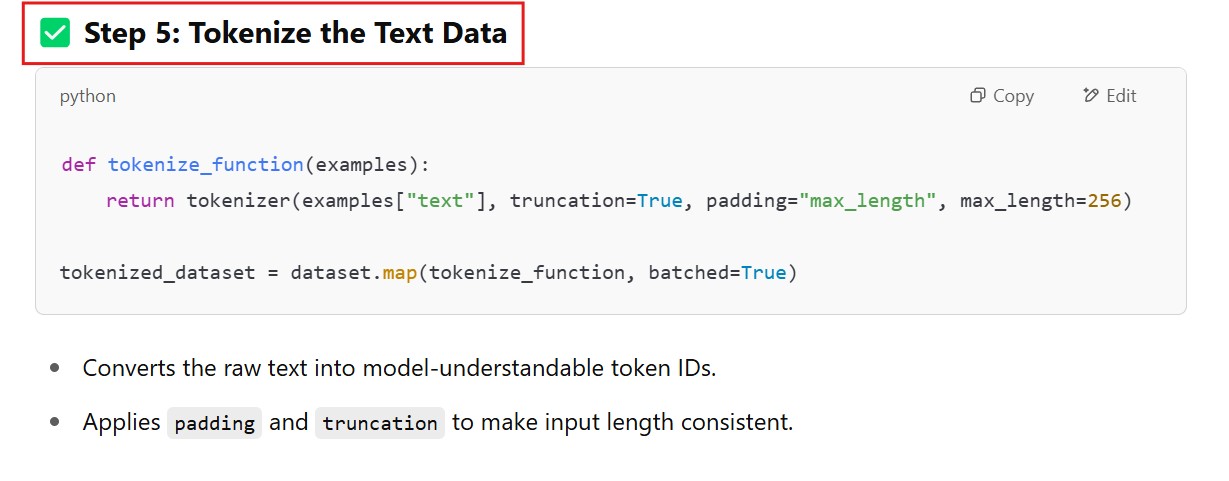
# Step 5: Tokenize the dataset
def tokenize_function(examples):
    return tokenizer(examples["text"], truncation=True, padding="max_length", max_length=256)

tokenized_dataset = dataset.map(tokenize_function, batched=True)

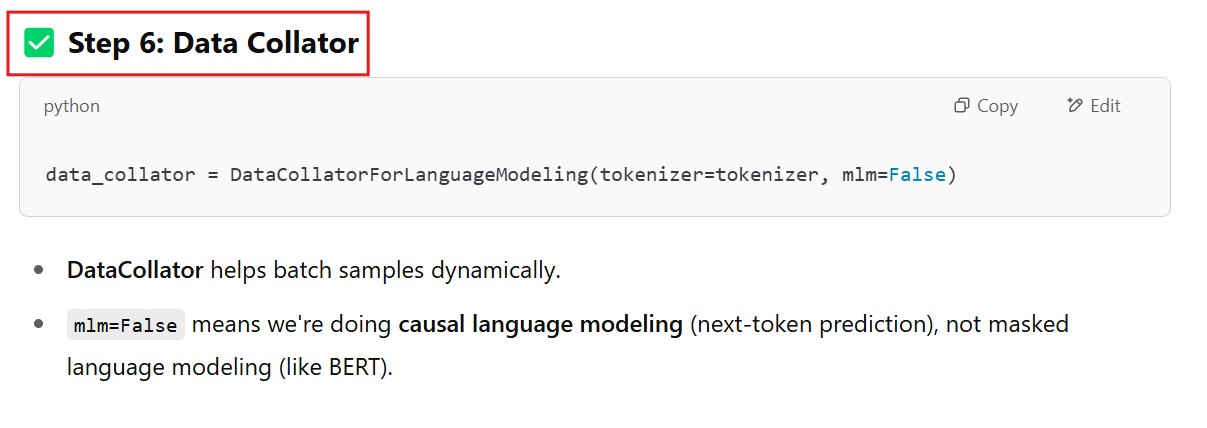
# Step 6: Data collator
data_collator = DataCollatorForLanguageModeling(tokenizer=tokenizer, mlm=False)

# Step 7: Define training arguments
training_args = TrainingArguments(
    output_dir="./lora-llama-legal",
    per_device_train_batch_size=2,
    gradient_accumulation_steps=4,
    num_train_epochs=3,
    learning_rate=2e-4,
    logging_steps=10,
    save_steps=50,
    save_total_limit=2,
    fp16=True,
    evaluation_strategy="no",
    report_to="none"
)

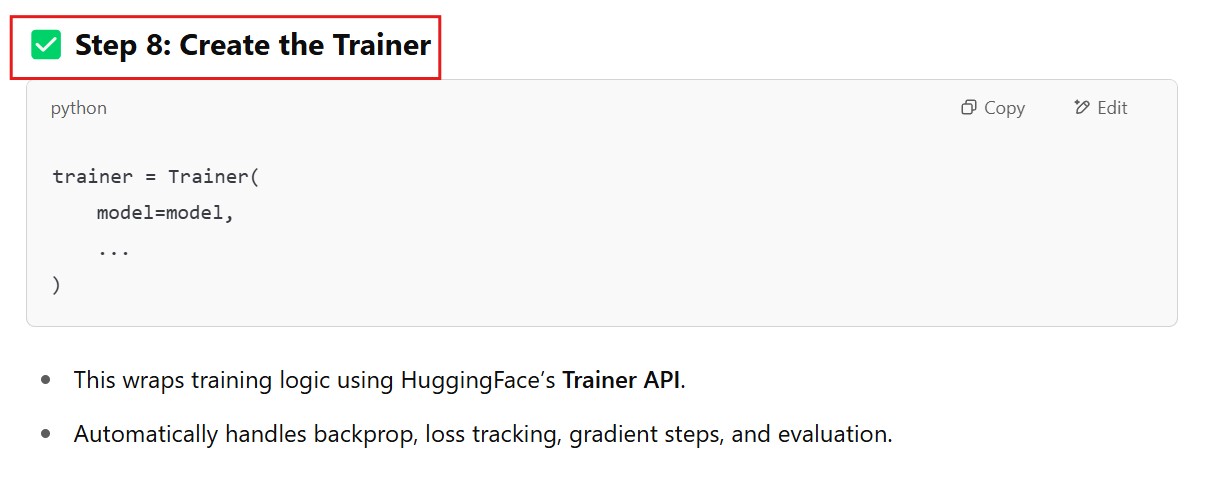
# Step 8: Trainer
trainer = Trainer(
    model=model,
    args=training_args,
    train_dataset=tokenized_dataset,
    tokenizer=tokenizer,
    data_collator=data_collator
)

# Step 9: Train!
trainer.train()

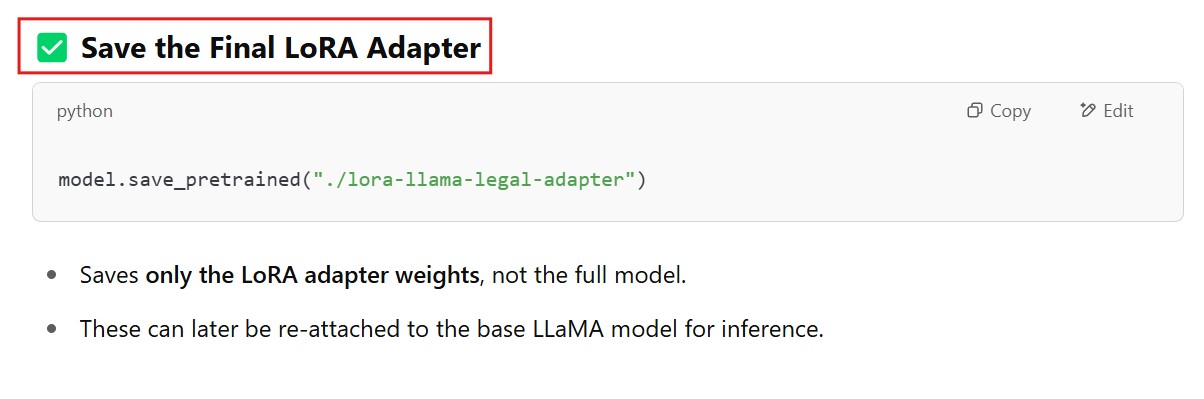
# Save final LoRA adapters
model.save_pretrained("./lora-llama-legal-adapter")