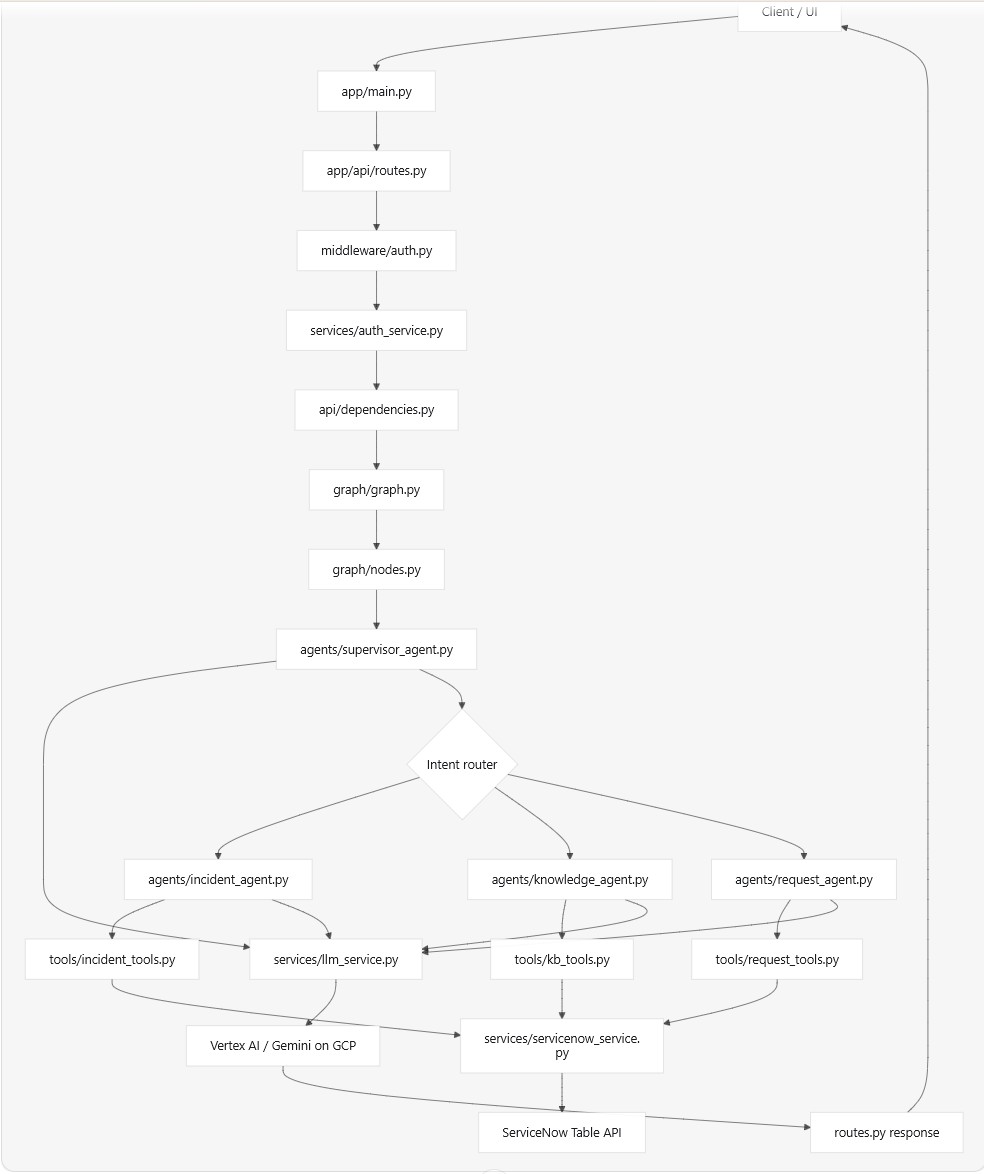
Agentic Platform Flowchart
app/main.py
import logging
from contextlib import asynccontextmanager
from fastapi import FastAPI
from app.api.routes import router
from app.core.config import get_settings
from app.db.session import init_db
from app.middleware.logging import request_logging
from app.middleware.tracing import tracing

@asynccontextmanager
async def lifespan(_:FastAPI):
    init_db()
    yield

def create_app()-> FastAPI:
    settings = get_settings()
    logging.basicConfig(level = settings.log_level)
    app = FastAPI(title="Service Now Agentic AI", version="1.0.0", lifespan=lifespan)
    app.middleware('http')(tracing)
    app.middleware('http')(request_logging)
    app.include_router(router)
    return app

app = create_app()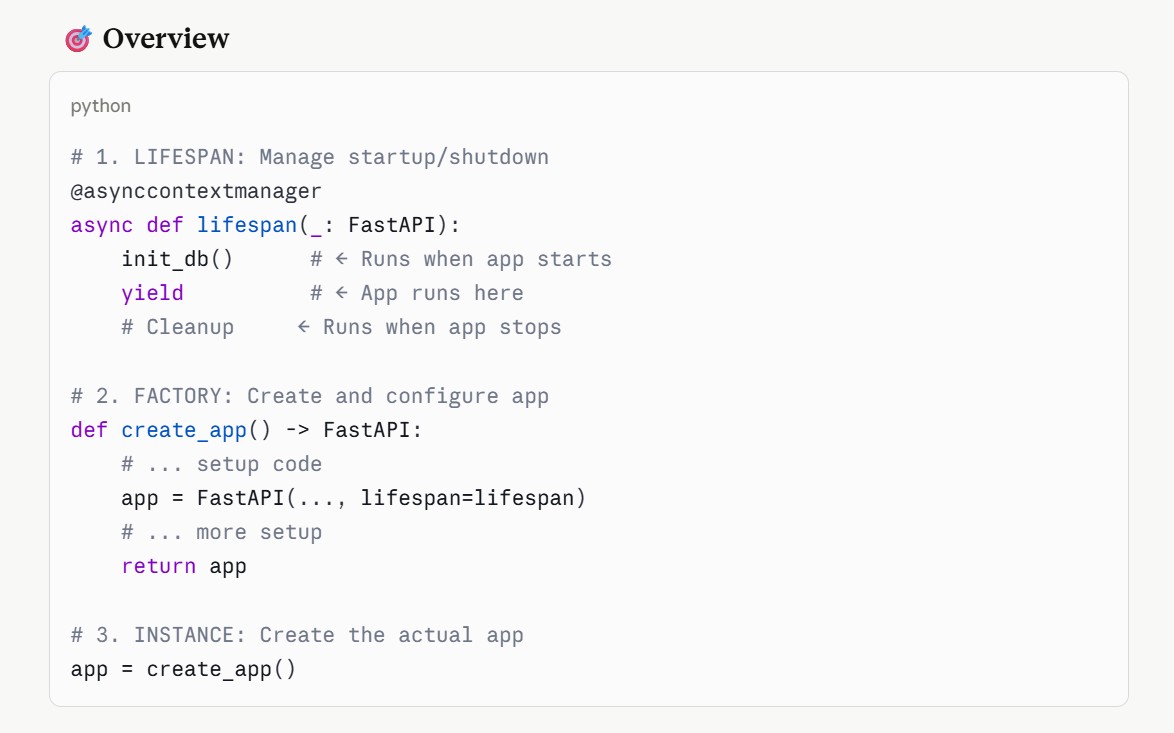
app/api/routes.py
from uuid import uuid4
from fastapi import APIRouter, Depends
from app.api.dependencies import get_agent_graph, get_memory
from app.core.config import get_settings
from app.middleware.auth import require_user
from app.schemas.chat import ChatRequest, ChatResponse
from app.schemas.incident import IncidentCreate
from app.schemas.response import HealthResponse
from app.tools.incident_tools import create_incident

router = APIRouter()

@router.get("/health", response_model=HealthResponse)
async def health():
    settings = get_settings()
    return HealthResponse(status="ok", environment=settings.app_env)

@router.post("/v1/chat", response_model=ChatResponse)
async def chat(request: ChatRequest, user: dict = Depends(require_user)):
    conversation_id = request.conversation_id or str(uuid4())
    memory = get_memory()
    memory.add(conversation_id, "user", request.message)
    result = await get_agent_graph().ainvoke({"message": request.message, "conversation_id": conversation_id})
    memory.add(conversation_id, "assistant", result["answer"])
    return ChatResponse(answer=result["answer"], conversation_id=conversation_id, intent=result["intent"], sources=result.get("sources", []))

@router.post("/v1/incidents")
async def open_incident(payload: IncidentCreate, user: dict = Depends(require_user)):
    return await create_incident(**payload.model_dump())
middleware/auth.py
from fastapi import Depends, HTTPException
from fastapi.security import HTTPAuthorizationCredentials, HTTPBearer
from app.services.auth_service import AuthService

bearer = HTTPBearer(auto_error=False)

def require_user(credentials: HTTPAuthorizationCredentials | None = Depends(bearer)) -> dict:
    if not credentials: raise HTTPException(status_code=401, detail="Bearer token required")
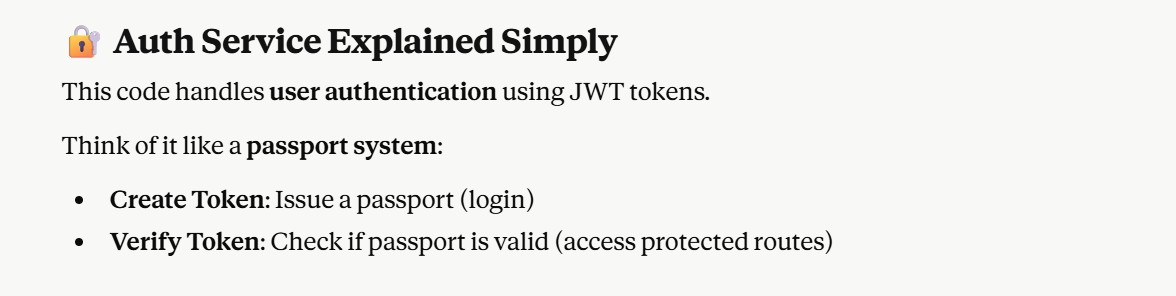
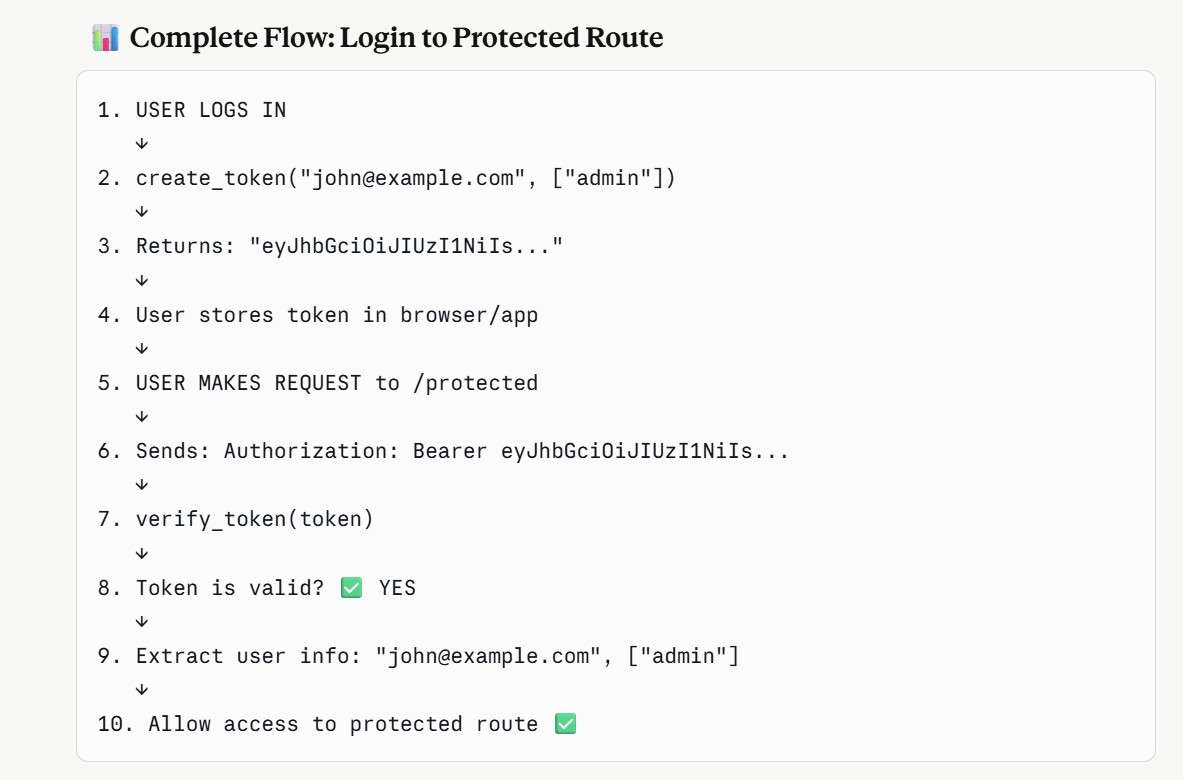
    return AuthService().verify_token(credentials.credentials) what is this auth code is doing explain me line by line in simple way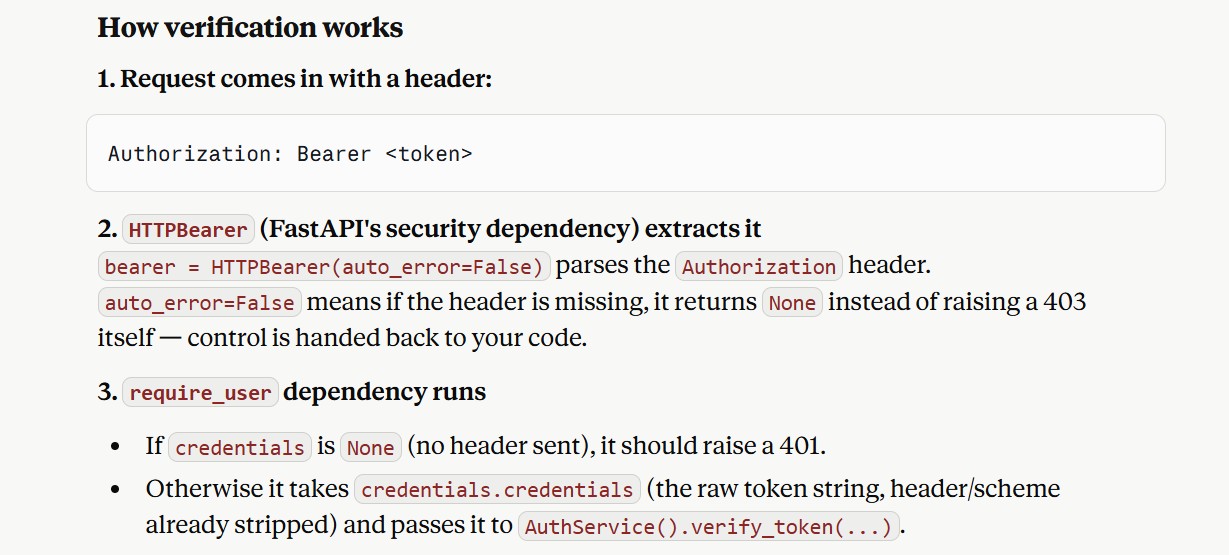
services/auth_service.py
from datetime import datetime, timedelta, timezone
import jwt
from fastapi import HTTPException, status
from app.core.config import get_settings

class AuthService:
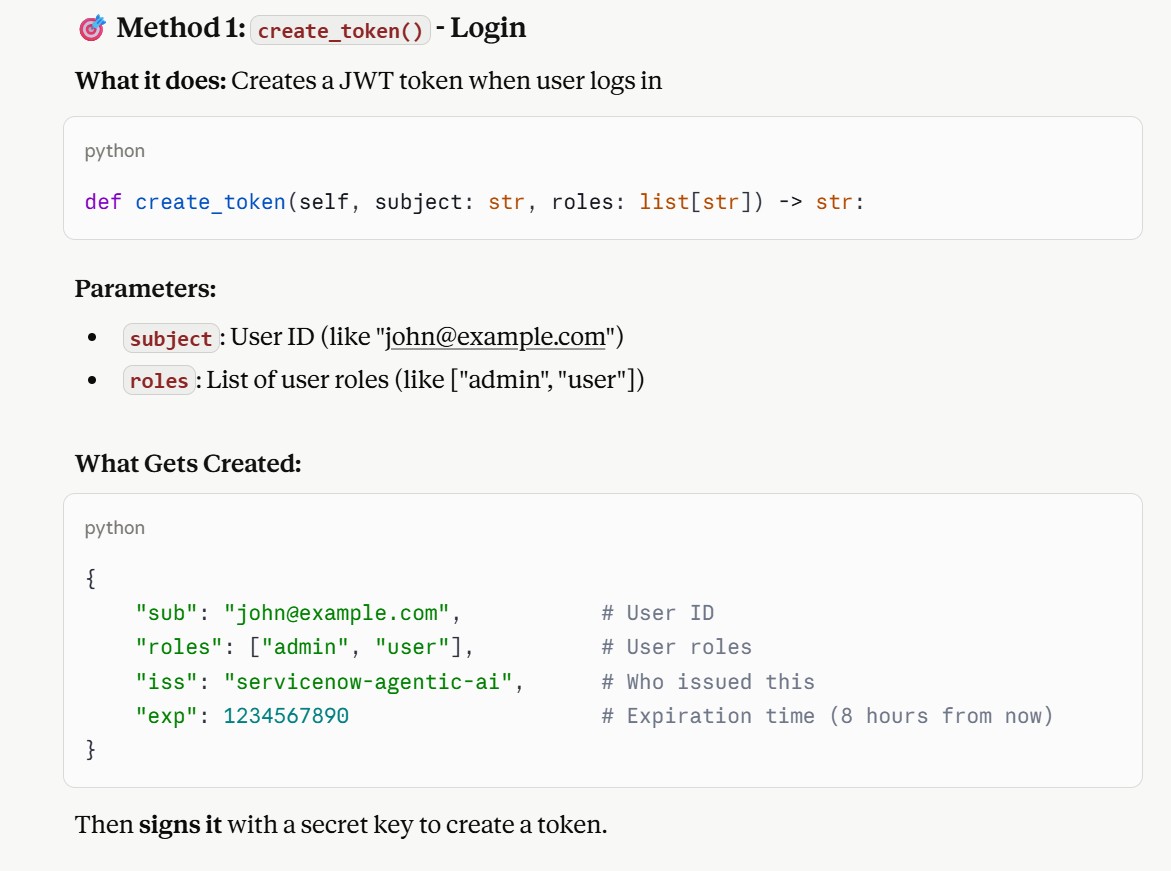
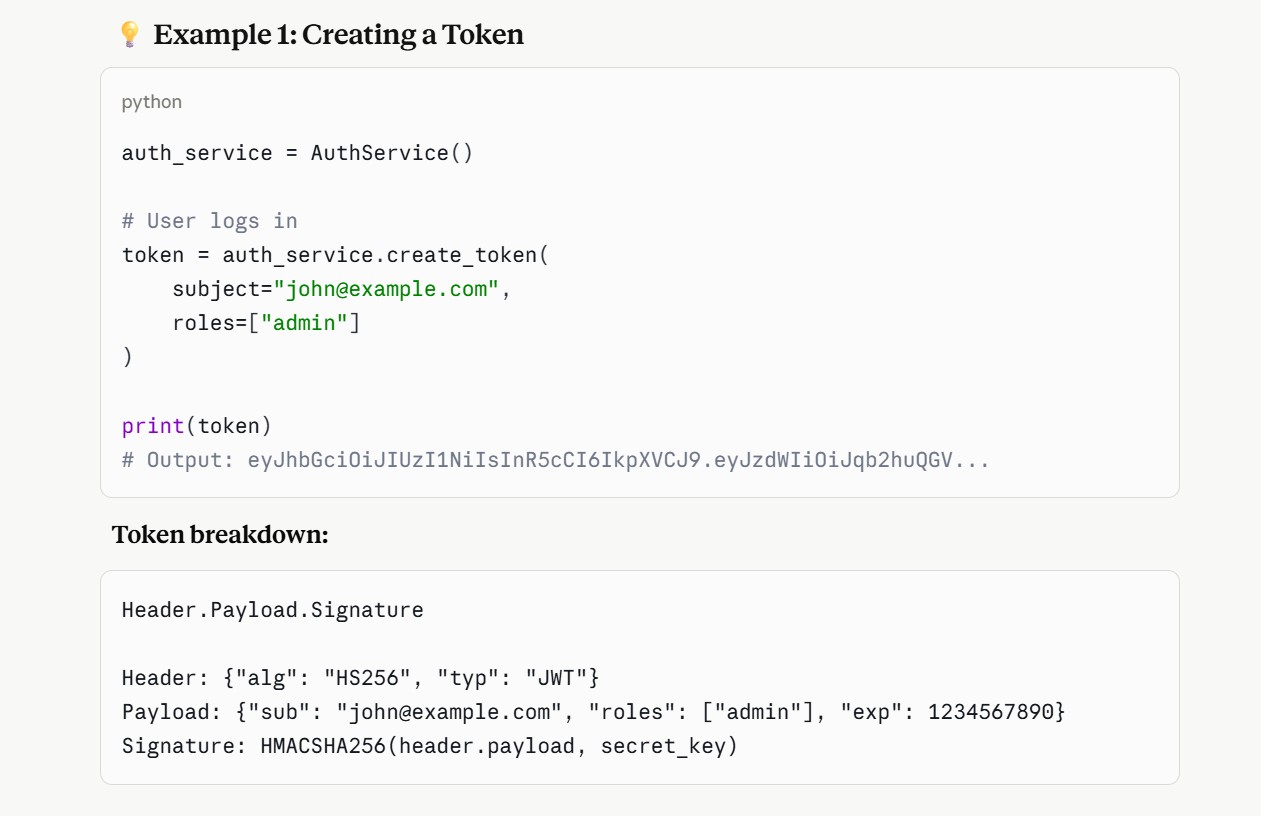
    def create_token(self, subject: str, roles: list[str]) -> str:
        settings = get_settings()
        return jwt.encode(
            {
                "sub": subject,              # ← User ID
                "roles": roles,              # ← User roles
                "iss": settings.jwt_issuer,  # ← Issuer (who made this)
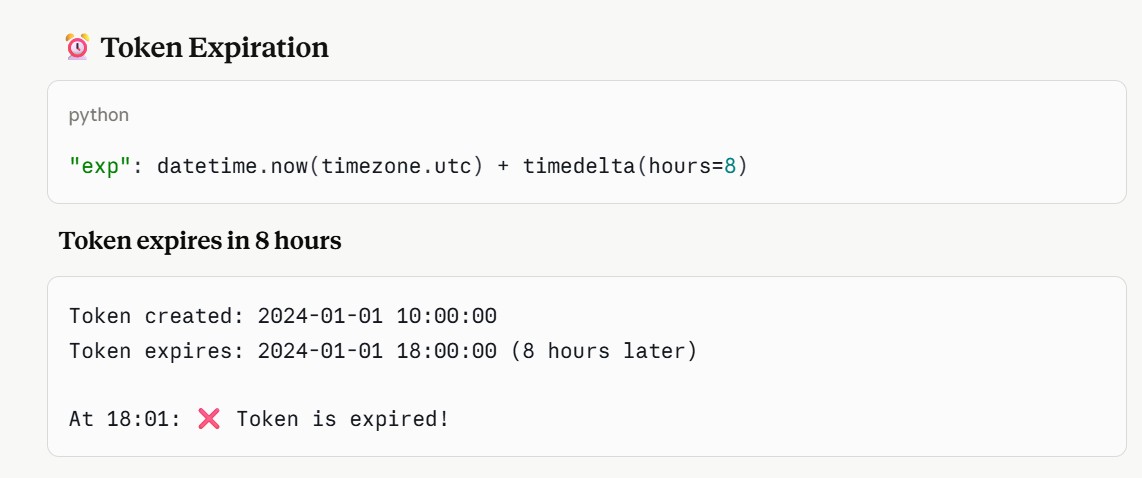
                "exp": datetime.now(timezone.utc) + timedelta(hours=8)  # ← Expires in 8 hours
            },
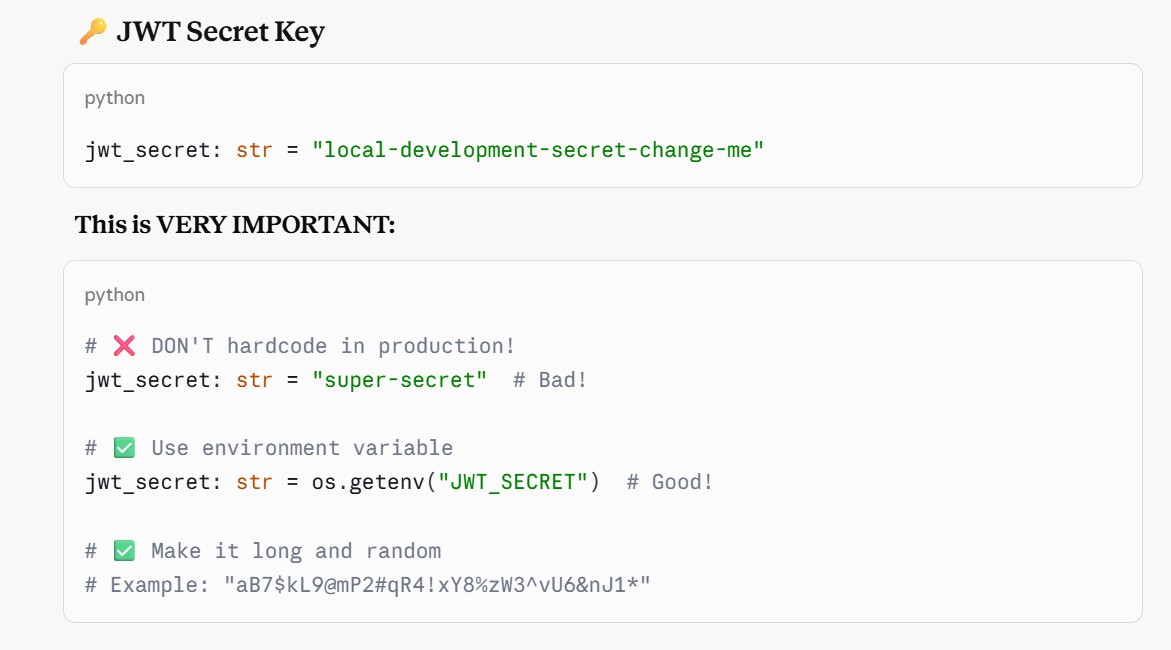
            settings.jwt_secret,            # ← Secret key for signing
            algorithm="HS256"               # ← Signing algorithm
        )

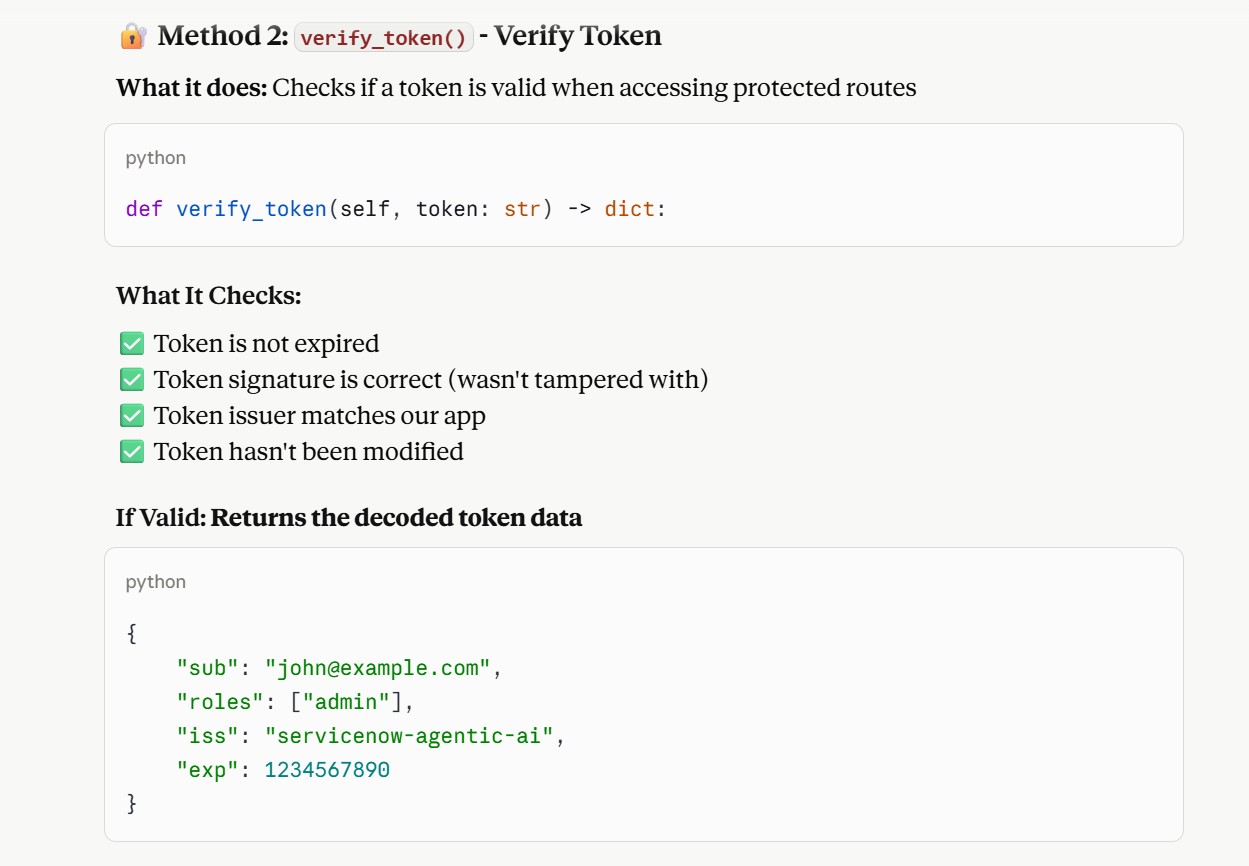
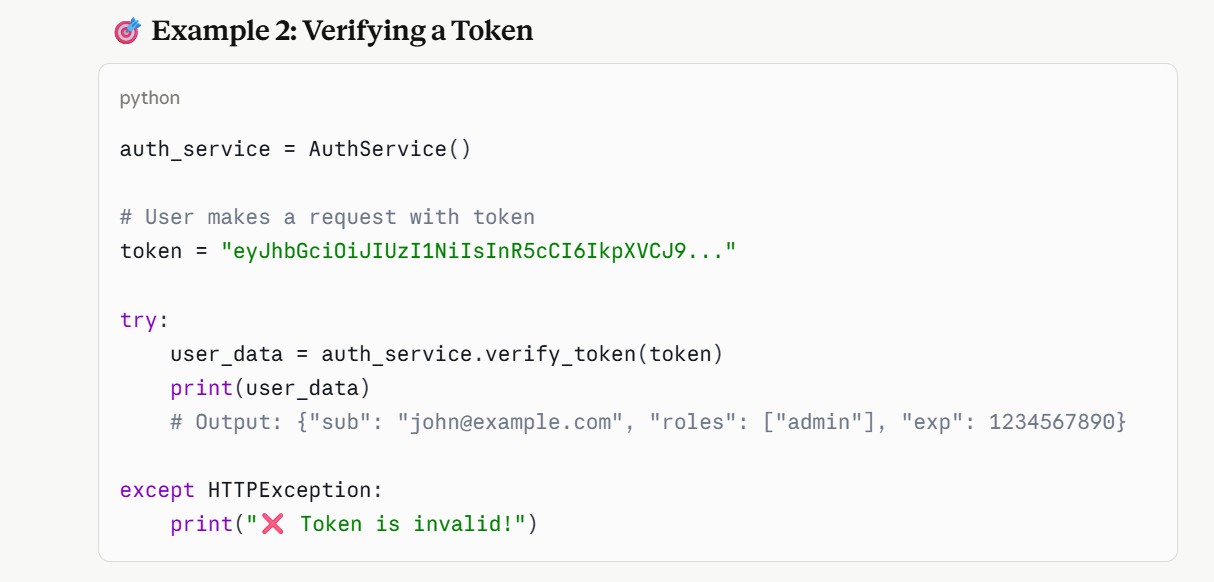
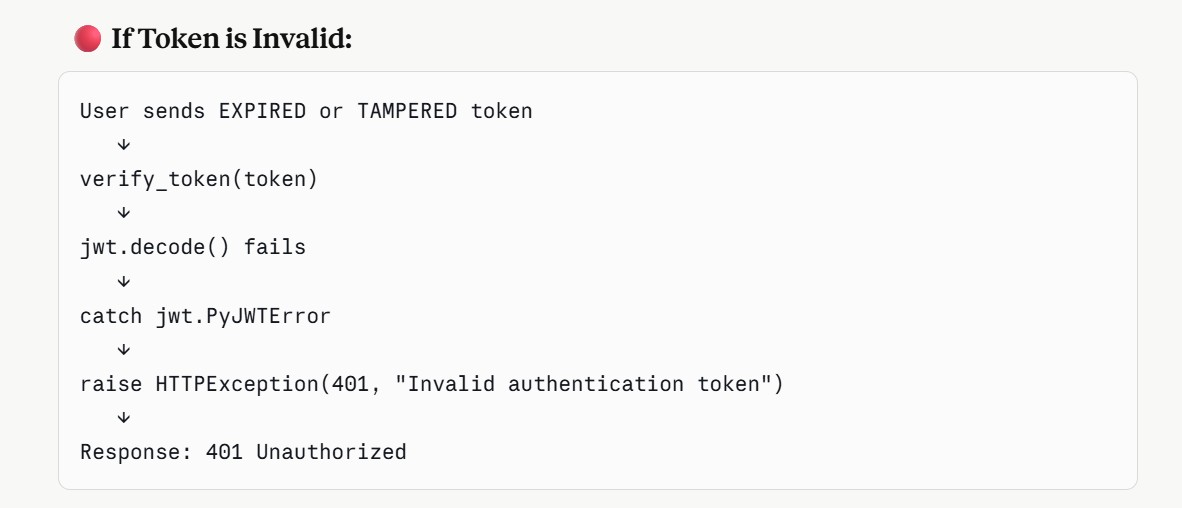
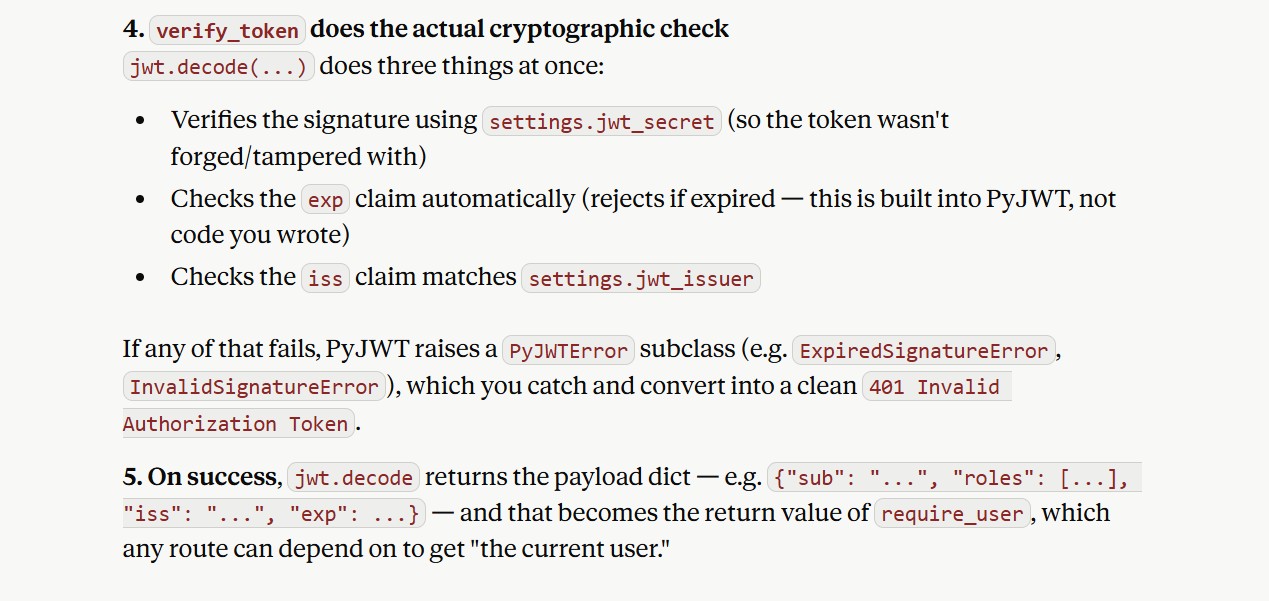
    def verify_token(self, token: str) -> dict:
        settings = get_settings()
        try:
            return jwt.decode(
                token,                      # ← Token to verify
                settings.jwt_secret,        # ← Secret key to verify
                algorithms=["HS256"],       # ← Allowed algorithms
                issuer=settings.jwt_issuer  # ← Check issuer matches
            )
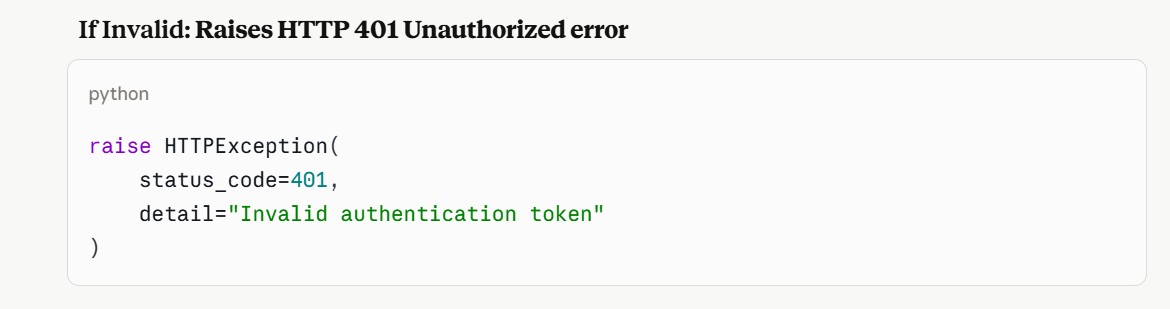
        except jwt.PyJWTError as exc:
            raise HTTPException(
                status_code=status.HTTP_401_UNAUTHORIZED,
                detail="Invalid authentication token"
            ) from exc
app/core/config.py
from functools import lru_cache
from pathlib import Path
from pydantic_settings import BaseSettings, SettingsConfigDict


class Settings(BaseSettings):
    model_config = SettingsConfigDict(env_file=".env", extra="ignore")
    app_env: str = "development"
    log_level: str = "INFO"
    gcp_project_id: str = ""
    gcp_location: str = "us-central1"
    vertex_model: str = "gemini-2.0-flash-001"
    servicenow_instance: str = ""
    servicenow_username: str = ""
    servicenow_password: str = ""
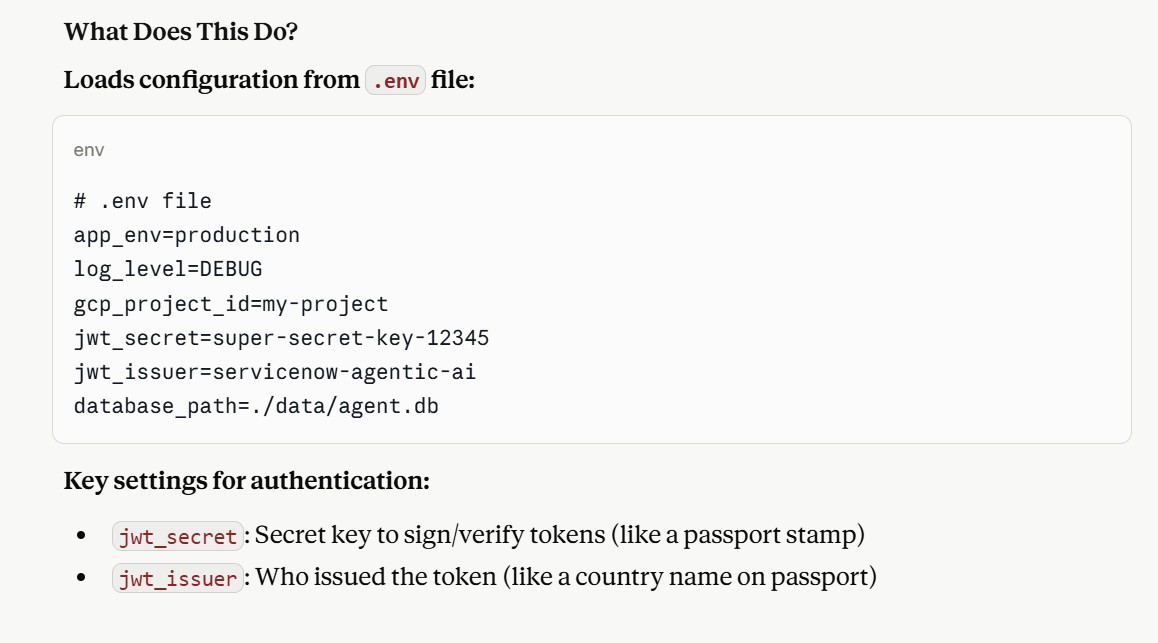
    jwt_secret: str = "local-development-secret-change-me"
    jwt_issuer: str = "servicenow-agentic-ai"
    database_path: str = "./data/agent.db"
    enable_write_operations: bool = False

    def ensure_data_dir(self) -> None:
        Path(self.database_path).parent.mkdir(parents=True, exist_ok=True)


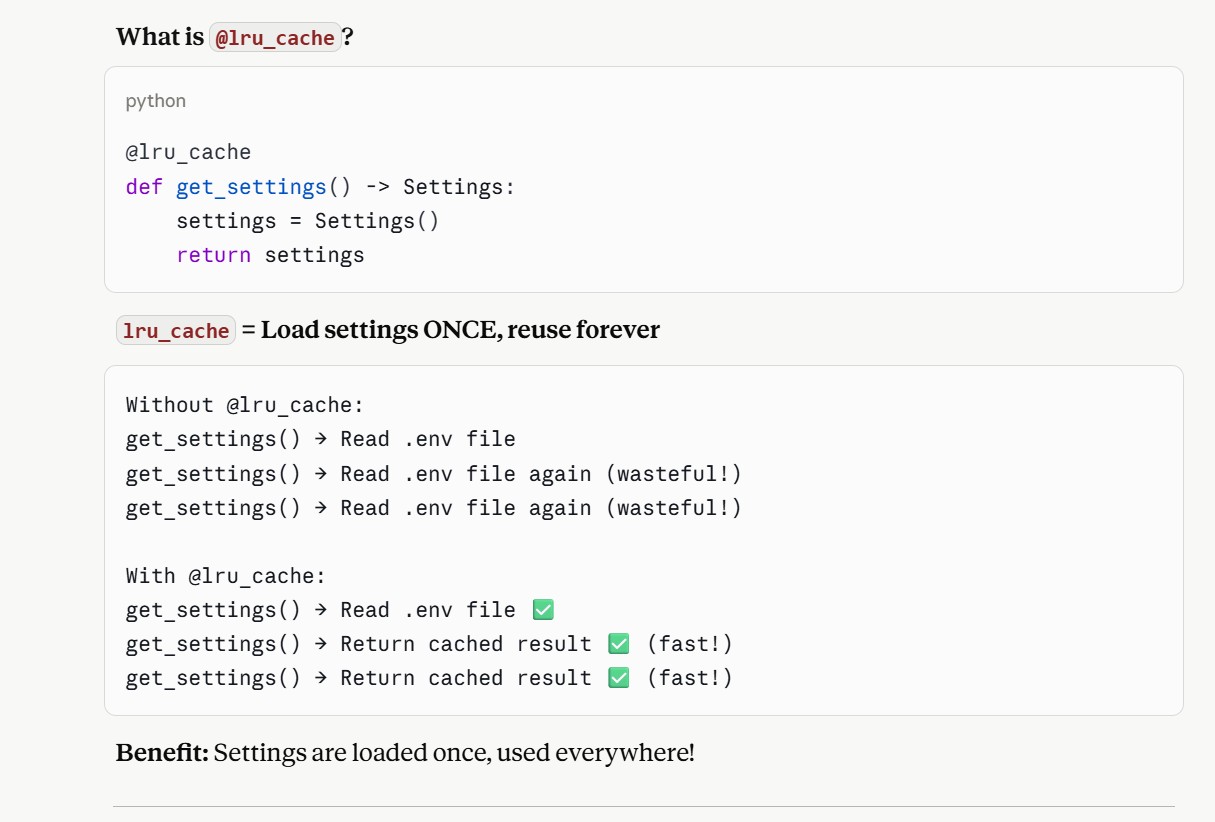
@lru_cache
def get_settings() -> Settings:
    settings = Settings()
    settings.ensure_data_dir()
    return settings