-

Optimization Algorithms In Deep Learning.
Optimization Algorithms For Neural Networks Table Of Contents: What Is An Optimization Algorithm? Gradient Descent Variants: Batch Gradient Descent (BGD) Stochastic Gradient Descent (SGD) Mini-Batch Gradient Descent Convergence analysis and trade-offs Learning rate selection and scheduling Adaptive Learning Rate Methods: AdaGrad RMSProp Adam (Adaptive Moment Estimation) Comparisons and performance analysis Hyperparameter tuning for adaptive learning rate methods Momentum-Based Methods: Momentum Nesterov Accelerated Gradient (NAG) Advantages and limitations of momentum methods Momentum variants and improvements Second-Order Methods: Newton’s Method Quasi-Newton Methods (e.g., BFGS, L-BFGS) Hessian matrix and its computation Pros and cons of second-order methods in deep learning Optimization Challenges and
-
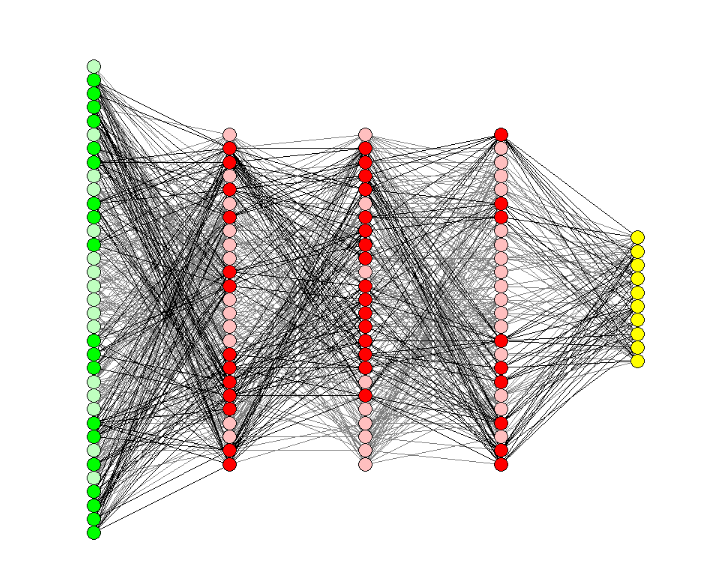
Feedforward Neural Networks
Feedforward Neural Network Table Of Contents: What Is Feedforward Neural Network? Why Are Neural Networks Used? Neural Network Architecture And Operation. Components Of Feedforward Neural Network. How Feedforward Neural Network Works? Why Does This Strategy Works? Importance Of Non-Linearity. Applications Of Feed Forward Neural Network. (1) What Is Feedforward Neural Network? The feed-forward model is the simplest type of neural network because the input is only processed in one direction. The data always flows in one direction and never backwards, regardless of how many buried nodes it passes through. A feedforward neural network, also known as a multilayer perceptron (MLP), is a
-

Softmax Activation Function
Softmax Activation Function Table Of Contents: What Is SoftMax Activation Function? Formula & Diagram For SoftMax Activation Function. Why Is SoftMax Function Important. When To Use SoftMax Function? Advantages & Disadvantages Of SoftMax Activation Function. (1) What Is SoftMax Activation Function? The Softmax Function is an activation function used in machine learning and deep learning, particularly in multi-class classification problems. Its primary role is to transform a vector of arbitrary values into a vector of probabilities. The sum of these probabilities is one, which makes it handy when the output needs to be a probability distribution. (2) Formula & Diagram
-

ReLU vs. Leaky ReLU vs. Parametric ReLU.
ReLU vs. Leaky ReLU vs. Parametric ReLU Table Of Contents: Comparison Between ReLU vs. Leaky ReLU vs. Parametric ReLU. Which One To Use At What Situation? (1) Comparison Between ReLU vs. Leaky ReLU vs. Parametric ReLU ReLU, Leaky ReLU, and Parametric ReLU (PReLU) are all popular activation functions used in deep neural networks. Let’s compare them based on their characteristics: Rectified Linear Unit (ReLU): Activation Function: f(x) = max(0, x) Advantages: Simplicity: ReLU is a simple and computationally efficient activation function. Sparsity: ReLU promotes sparsity by setting negative values to zero, which can be beneficial in reducing model complexity. Disadvantages:
-

Exponential Linear Units (ELU) Activation Function.
Exponential Linear Unit Activation Function Table Of Contents: What IsExponential Linear Unit Activation Function? Formula & Diagram For Exponential Linear Unit Activation Function. Where To Use Exponential Linear Unit Activation Function? Advantages & Disadvantages Of Exponential Linear Unit Activation Function. (1) What Is Exponential Linear Unit Activation Function? The Exponential Linear Unit (ELU) activation function is a type of activation function commonly used in deep neural networks. It was introduced as an alternative to the Rectified Linear Unit (ReLU) and addresses some of its limitations. The ELU function introduces non-linearity, allowing the network to learn complex relationships in the data.
-
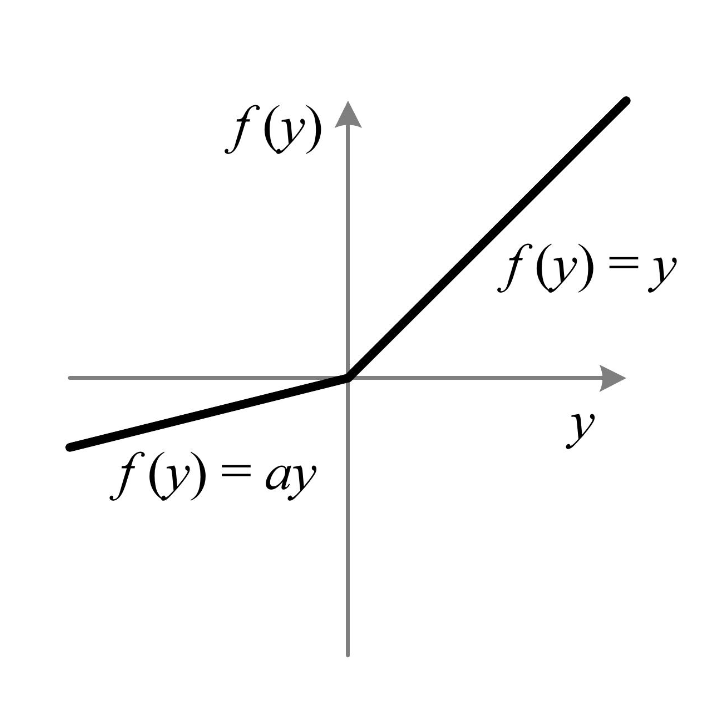
Parametric ReLU (PReLU) Activation Function
Parametric ReLU (PReLU) Activation Function Table Of Contents: What Is Parametric ReLU (PReLU) Activation Function? Formula & Diagram For Parametric ReLU (PReLU) Activation Function. Where To Use Parametric ReLU (PReLU) Activation Function? Advantages & Disadvantages Of Parametric ReLU (PReLU) Activation Function. (1) What Is Parametric ReLU (PReLU) Activation Function? The Parametric ReLU (PReLU) activation function is an extension of the standard ReLU (Rectified Linear Unit) function that introduces learnable parameters to control the slope of the function for both positive and negative inputs. Unlike the ReLU and Leaky ReLU, which have fixed slopes, the PReLU allows the slope to be
-

Leaky ReLU Activation Function.
Leaky ReLU Activation Function. Table Of Contents: What Is Leaky ReLU Activation Function? Formula & Diagram For Leaky ReLU Activation Function. Where To Use Leaky ReLU Activation Function? Advantages & Disadvantages Of Leaky ReLU Activation Function? (1) What Is Leaky ReLU Activation Function? The Leaky ReLU (Rectified Linear Unit) activation function is a modified version of the standard ReLU function that addresses the “dying ReLU” problem, where ReLU neurons can become permanently inactive. The Leaky ReLU introduces a small slope for negative inputs, allowing the neuron to respond to negative values and preventing complete inactivation. (2) Formula & Diagram For
-
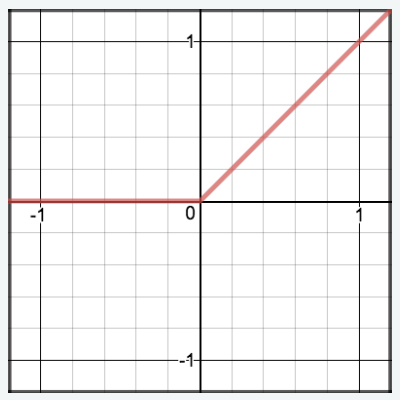
Rectified Linear Unit (ReLU) Activation:
Rectified Linear Unit (ReLU) Activation: Table Of Contents: What Is Rectified Linear Unit (ReLU) Activation? Formula & Diagram For Rectified Linear Unit (ReLU) Activation. Where To Use Rectified Linear Unit (ReLU) Activation? Advantages & Disadvantages Of Rectified Linear Unit (ReLU) Activation. (1) What Is Rectified Linear Unit (ReLU) Activation? Returns the input if it is positive; otherwise, outputs zero. Simple and computationally efficient. Popular in deep neural networks due to its ability to alleviate the vanishing gradient problem. (2) Formula & Diagram For Rectified Linear Unit (ReLU) Activation. Formula: Diagram: (3) Where To Use Rectified Linear Unit (ReLU) Activation. Hidden
-
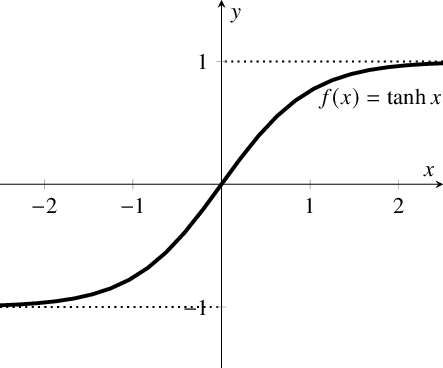
Hyperbolic Tangent (tanh) Activation.
Hyperbolic Tangent (tanh) Activation. Table Of Contents: What Is Hyperbolic Tangent (tanh) Activation? Formula & Diagram For Hyperbolic Tangent (tanh) Activation. Where To Use Hyperbolic Tangent (tanh) Activation? Advantages & Disadvantages Of Hyperbolic Tangent (tanh) Activation. (1) What Is Hyperbolic Tangent (tanh) Activation? Maps the input to a value between -1 and 1. Similar to the sigmoid function but centred around zero. Commonly used in hidden layers of neural networks. (2) Formula & Diagram For Hyperbolic Tangent (tanh) Activation Formula: Diagram: (3) Where To Use Hyperbolic Tangent (tanh) Activation? Hidden Layers of Neural Networks: The tanh activation function is often
-

Sigmoid Activation Function.
Sigmoid Activation Functions Table Of Contents: What Is Sigmoid Activation Function? Formula & Diagram For Sigmoid Activation Function. Where To Use Sigmoid Activation Function? Advantages & Disadvantages Of Sigmoid Activation Function. (1) What Is Sigmoid Activation Function? Maps the input to a value between 0 and 1. S-shaped curve. Used in the output layer of binary classification problems, where the output represents the probability of belonging to a class. (2) Formula & Diagram Sigmoid Activation Function? Formula: Diagram: (3) Where To Use Sigmoid Activation Function? Binary Classification: Sigmoid activations are often used in the output layer of neural networks for