-

AgenticAI – Customer Service Agent
Agentic AI – Customer Service Agents Table Of Contents: What Is Customer Service Agents ? What Tasks Customer Service Agents Can Perform ? Steps To Build Customer Service Agents. Python Implementation. (1) What Is Customer Service Agents ? (2) What Tasks Customer Service Agents Can Perform ? (3) Steps To Implement Customer Service Agents. (4) Python Implementation (1) Set Up the Environment pip install openai langchain pymilvus tiktoken (2) Inject & Embed Support Document from langchain.document_loaders import DirectoryLoader from langchain.text_splitter import RecursiveCharacterTextSplitter from langchain.embeddings.openai import OpenAIEmbeddings from pymilvus import Collection, connections from langchain.vectorstores.milvus import Milvus # 1. Connect to Milvus
-

AgenticAI – Understanding Agentic AI ?
Agentic AI – Understanding Agentic AI . Table Of Contents: What Is Agentic AI ? Key Features of Agentic AI. How Is It Different From Regular AI? Examples Of Agentic AI. How To Mention The Goals Of The AgenticAI Model ? (1) What Is Agentic AI ? Agentic AI is a type of smart computer program that can think for itself, make decisions, and take actions to reach a goal—kind of like a little robot brain with a mission. (2) Key Features of Agentic AI: (3) How Is It Different From Regular AI? Regular AI waits for you to tell
-

Agentic AI – Syllabus
Agentic AI Syllabus Table Of Contents Foundatation Of Agentic AI. User Interaction Layer Of Agentic AI. Input Validation & Guardrails Layer Of Agentic AI. Orchestration / Control Layer Of Agentic AI. Agent Selection & Role Assignment Layer Of Agentic AI. Reasoning & Planning Layer (Inside the Agent) Of Agentic AI. Knowledge Retrieval Layer (RAG) Of Agentic AI. Memory Layer (Context & Experience) Of Agentic AI. LLM (Model) Layer — Intelligence Core Of Agentic AI. Tool & Action Layer (Execution) Of Agentic AI. Observation & Feedback Layer Of Agentic AI. Reflection & Iteration Layer Of Agentic AI. Output Validation & Safety Layer Of
-

GenAI – Internal Q & A Model
Gen AI – Q & A Model Table Of Contents: Define The Problem Statement. Steps To Complete This Use Case. (1) Define The Problem Statement (2) Step-by-Step Guide to Build HR Policy Assistant (RAG-based) (3) Collect & Prepare HR Documents. (1) Install Required Libraries pdfplumber python-docx unstructured pip install pdfplumber python-docx unstructured (2) Load and Extract Text from Documents import os import pdfplumber from docx import Document def load_text_from_pdf(file_path): text = “” with pdfplumber.open(file_path) as pdf: for page in pdf.pages: text += page.extract_text() + “n” return text def load_text_from_docx(file_path): doc = Document(file_path) return “n”.join([para.text for para in doc.paragraphs]) def load_text_from_txt(file_path):
-
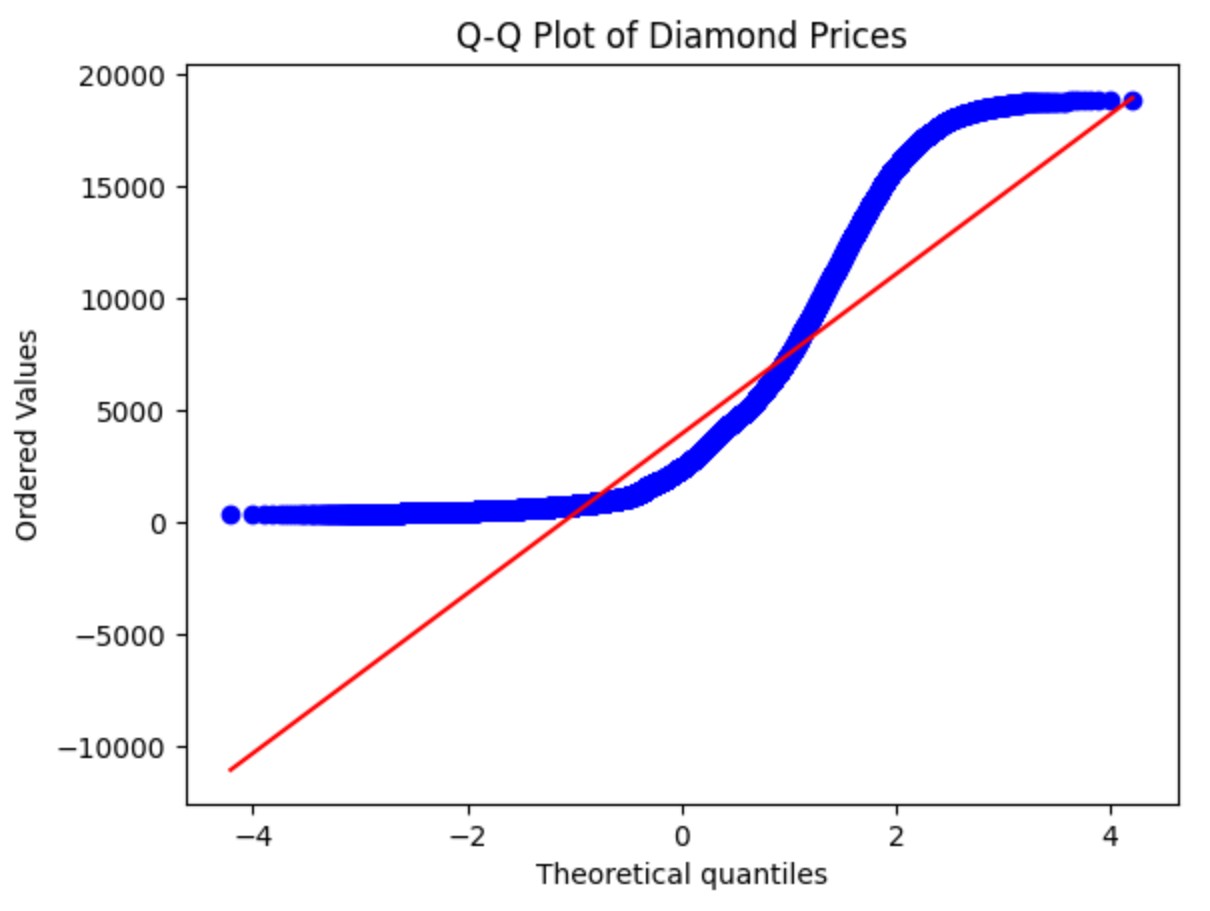
Seaborn – Q – Q Plot
Linear Regression – Assumption- 1 (Linear Relationship) Table Of Contents: What Is Q – Q Plot ? Example Of Q – Q Plot . Why There Is A Straight Line In The Q – Q Plot ? (1) What Is Q – Q Plot ? A Q–Q plot (Quantile–Quantile plot) is a probability plot that compares the quantiles of a dataset to the quantiles of a theoretical distribution (often the normal distribution). It helps to visually check if your data is normally distributed. (2) When to use a Q–Q Plot ? To assess normality (Is my data normally distributed?) To
-
Linear Regression – Assumption – 6 (How To Detect & Avoid Endogeneity ?)
-
Linear Regression – Assumption – 5 (How To Detect & Avoid Autocorrelation In Regression ?)
How To Detect & Avoid Autocorrelation In Regression ? Table Of Contents: Methods To Detect Autocorrelation In Error Term? Methods To Avoid The Autocorrelation In Error Term. (1) Methods To Detect Autocorrelation In Error Term? Residual Plot (vs. time or observation order) Durbin-Watson Test Autocorrelation Function (ACF) Plot Ljung-Box Test (for multiple lags) (1.1) Residual Plot To Detect Autocorrelation In Error Term? import numpy as np import pandas as pd import matplotlib.pyplot as plt import statsmodels.api as sm # Simulate ordered data (e.g., time series) np.random.seed(42) n = 100 advertising = np.random.normal(1000, 200, n) # Introduce autocorrelation in error terms
-
Linear Regression – Assumption – 3(How To Detect & Avoid Non Normal Distribution Of Error Term ?)
-

Linear Regression – Assumption – 2 (How To Detect & Avoid Multicollinearity ?)
Linear Regression – Assumption- 2 (How To Detect & Avoid Multicollinearity ?) Table Of Contents: How To Detect Multicollinearity In The Dataset ? Correlation Matrix. Variance Inflection Factor Model Behavior Observation. How To Avoid Multicollinearity In The Dataset ? Remove One of the Correlated Variables Use Principal Component Analysis (PCA) Use Regularization Techniques (Ridge/Lasso) (1) How To Detect Multicollinearity In The Dataset? Method – 1: Correlation Matrix (Pearson correlation) We will use Pearson ‘r’ Correlation Coefficient to find the correlation between two variable. import seaborn as sns import matplotlib.pyplot as plt # Load dataset tips = sns.load_dataset("tips") # Compute the
-
Linear Regression – Assumption -2 (No Multicollinearity)